
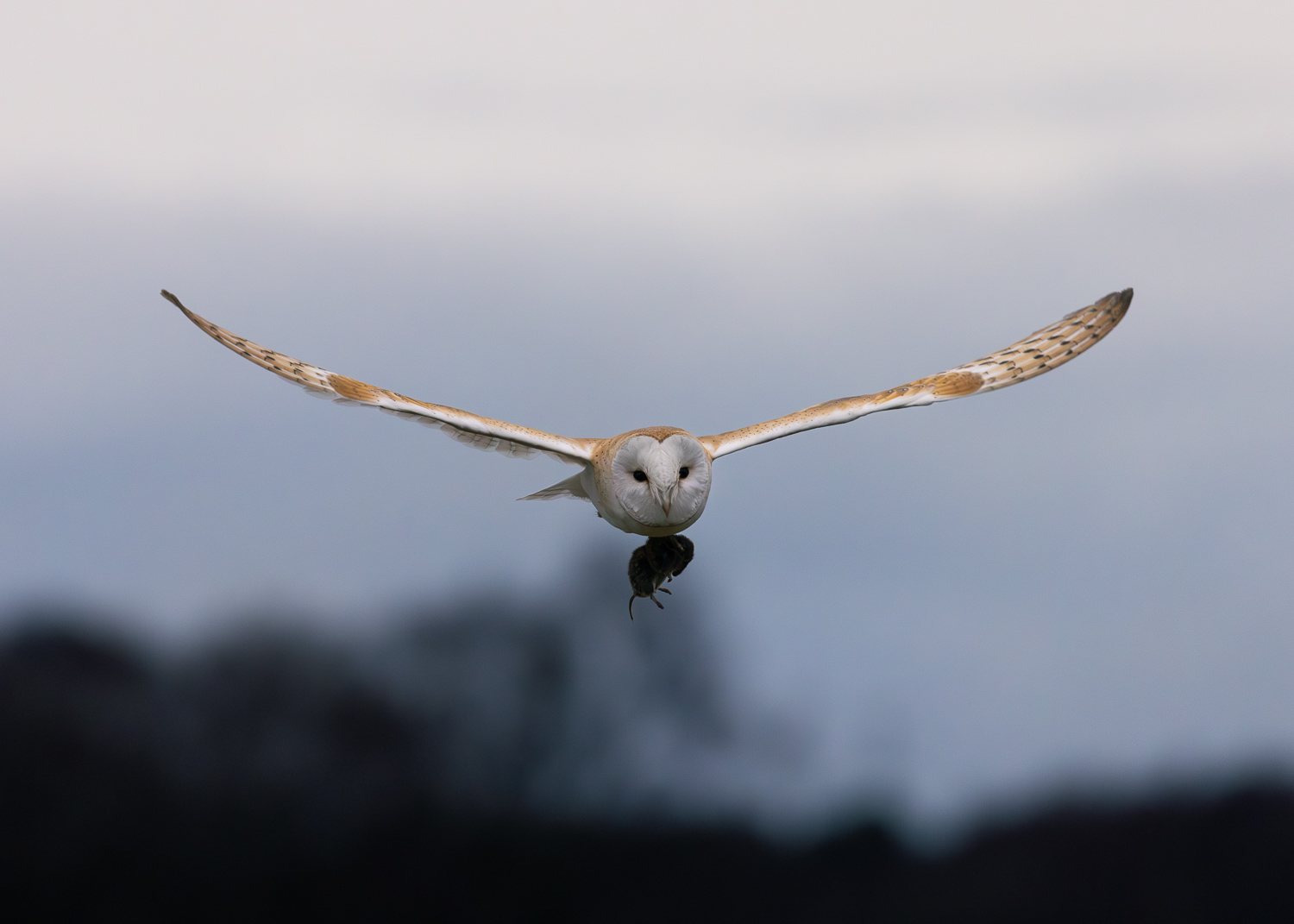
Today’s Field Notes post relives a close encounter with a local barn owl at dusk. A true-to-life experience with an owl I’ve been following for over a year. This owl in particular is a prolific hunter and the definition of resilience. Whilst I do briefly touch on fieldcraft and camera settings in this post, my in-depth guide to ethical barn owl photography provides you with everything you need to know to enjoy your own natural moments out in the field.
09/02/2026
A Ghost in the Fading Light
After a brief sighting the evening before, I returned to a new local spot at around 3:00 PM – camera packed, camouflage ready, and determined to map the flight path of a resident barn owl. A large bush overlooking the field offered perfect cover, giving me a concealed vantage point with a clear view of the area I’d seen it quartering along. I set up the camera, mounted it on the tripod, and draped a one‑way Realtree camouflage net over the setup. It blended seamlessly into the surroundings and allowed me to observe without disturbance.
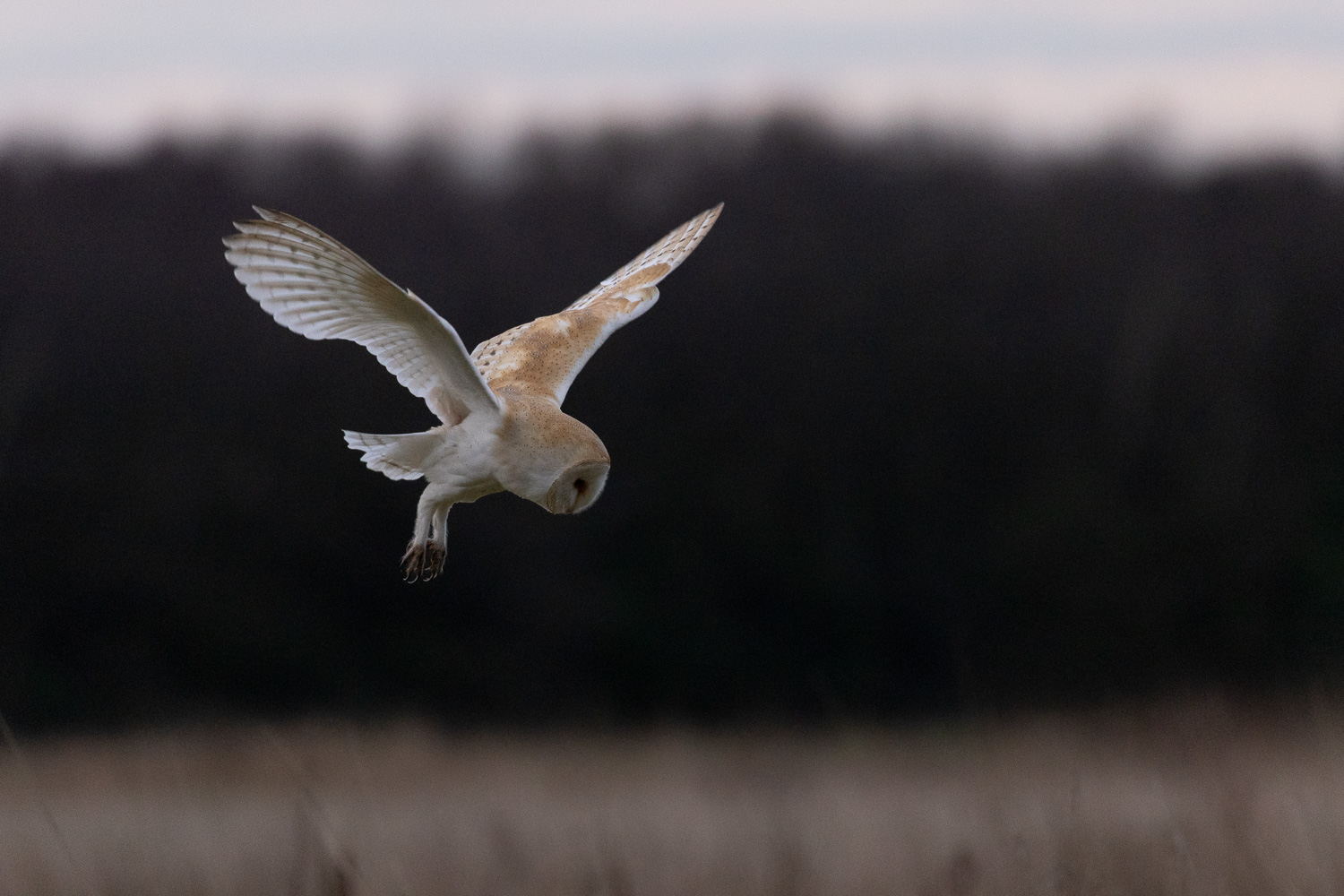
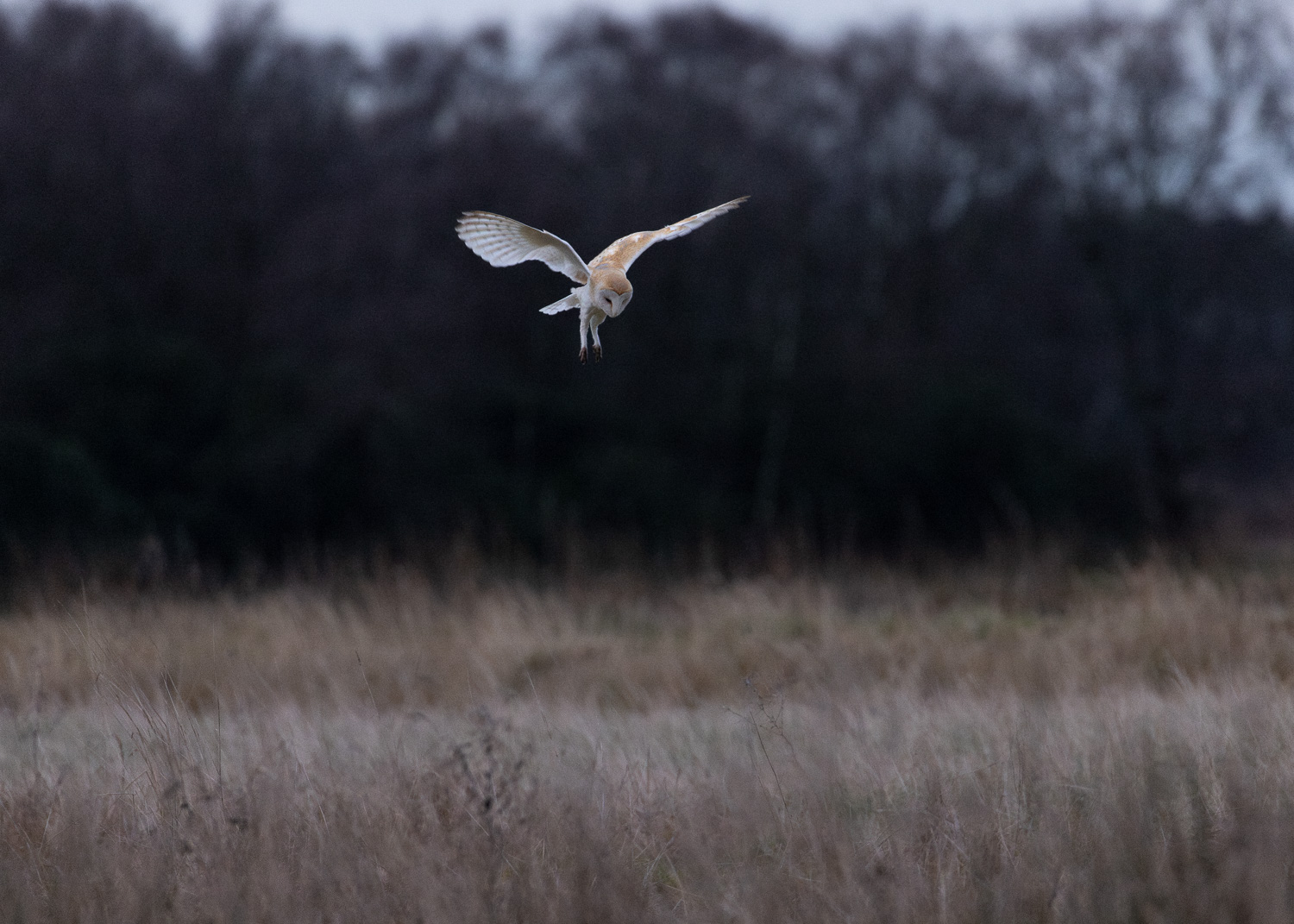
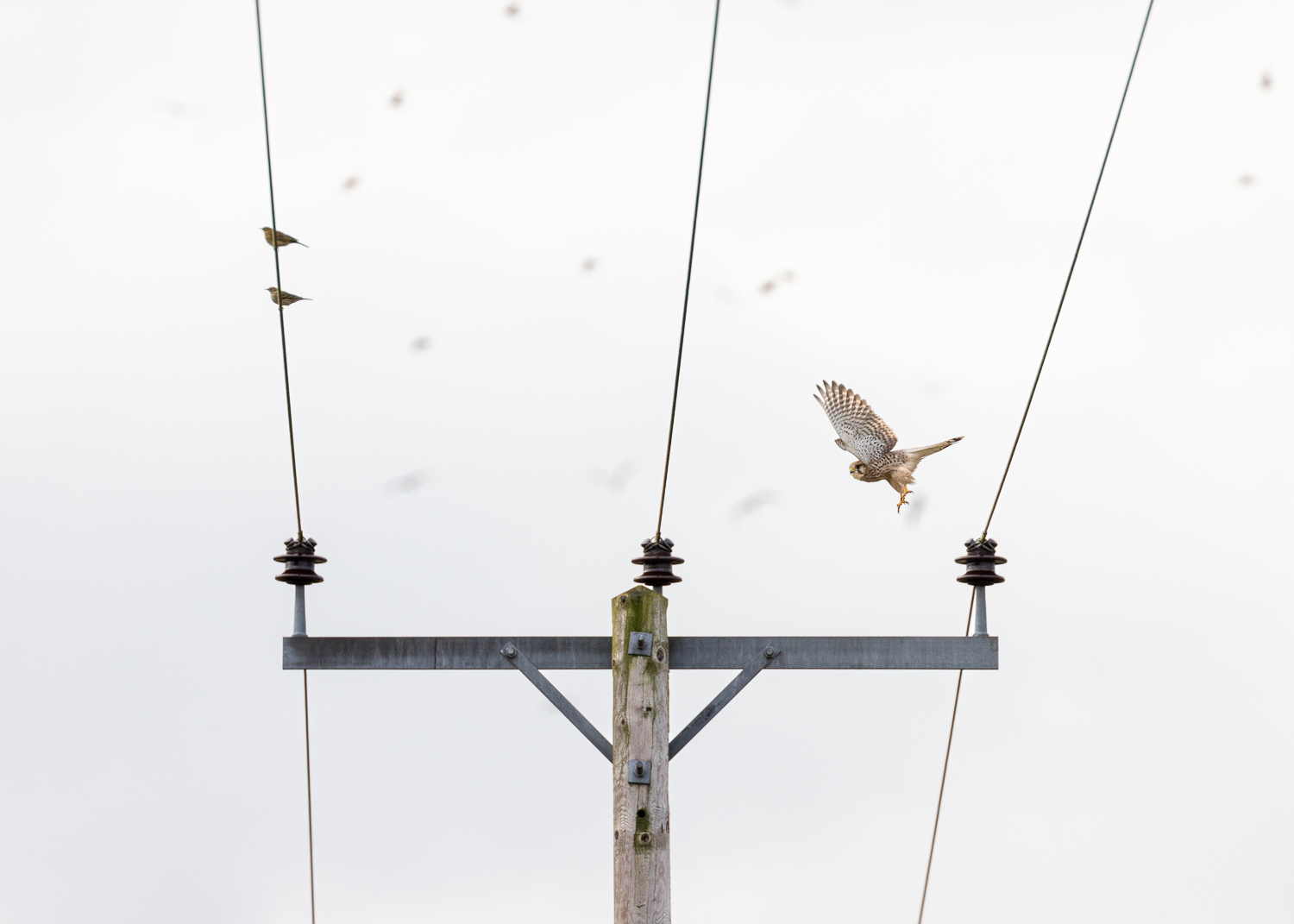
For nearly two hours, I sat in absolute silence, letting the light fade over the long grass. The field was alive with bird calls and hares hopping along the edge of the treeline. I even saw a male kestrel posturing confidently from its telephone pole perch as a pair of crows drifted past. As the last of the light slipped away, I was close to calling it a day when a pale shape suddenly swept low across the field. A familiar ghostly figure, effortlessly silent as it began quartering no more than twenty metres from my position.
Success.
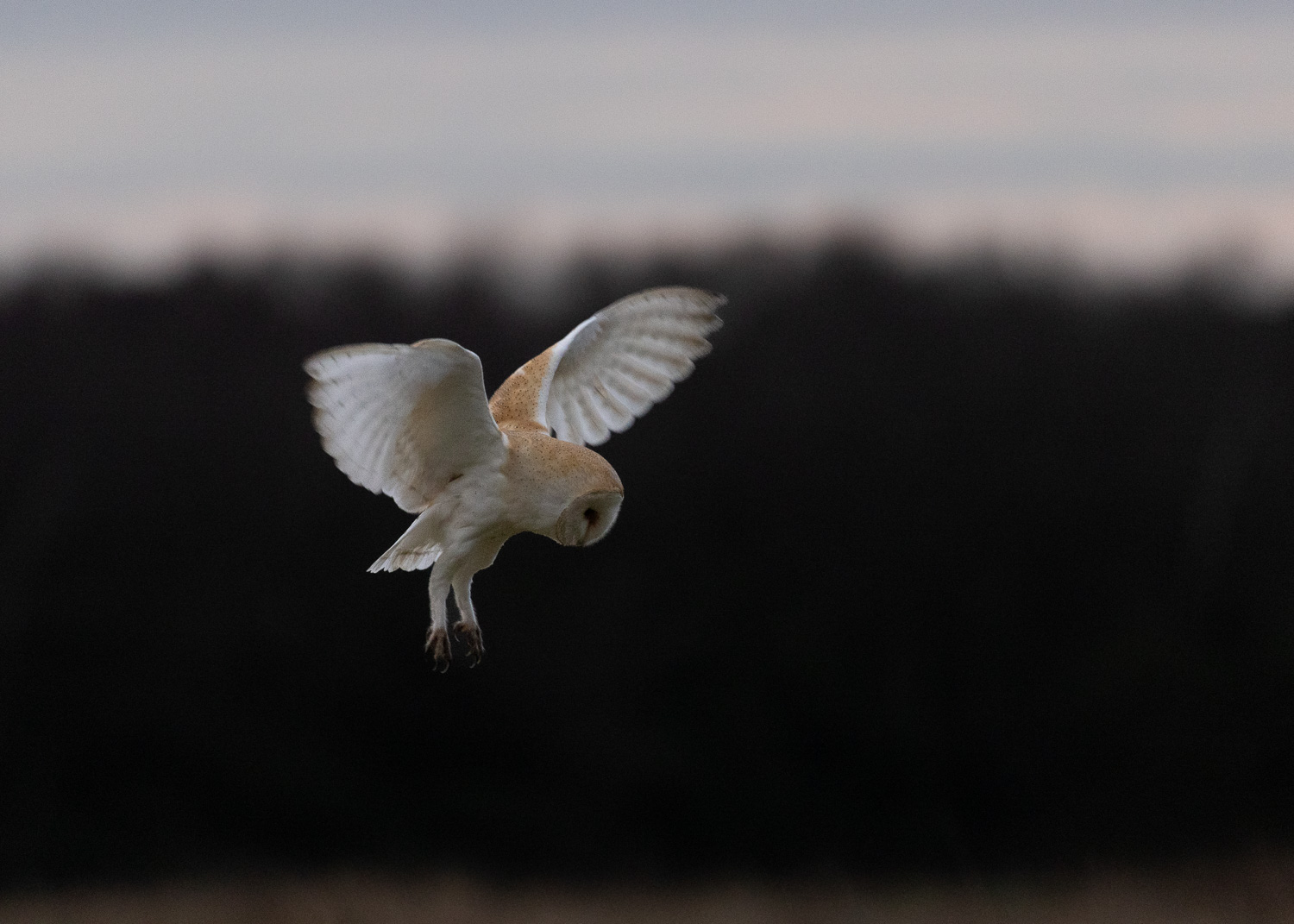
The light was now barely usable, forcing my ISO up to 12,800, just enough to hold a workable shutter speed. Even so, I managed a handful of record shots – enough to capture the moment, but not enough to distract from simply watching this incredible bird work the field at close range.
Why Concealment Matters More Than Gear
Wildlife photography often gets framed as a gear‑driven pursuit: faster lenses, lower ISOs, better autofocus. But none of that matters if the subject never comes close enough for a meaningful encounter. In the field, concealment is the key. It’s the difference between watching a bird from a distance and being treated to a close-up display of behaviour and natural ability.
On this evening, my camouflage net and careful positioning did far more for me than any technical upgrade could have. By blending into the landscape, I became just another shape in the hedgerow.
That’s the part many photographers overlook. You can buy the sharpest lens on the market, but you can’t buy fieldcraft. You earn it through respect, by reading the environment, and removing yourself from the equation. When you do, wildlife behaves as if you’re not there, and that’s when the intimate moments happen.
Good fieldcraft isn’t glamorous. It’s patience, attention to detail, and a respect for nature and the landscape; the same principles I apply in my approach to nature photography. It’s also the most reliable way to experience wildlife on its own terms, and no amount of expensive equipment can replace that.
How I Prepared for the Encounter
My setup for this encounter was simple but intentional. I was shooting with a Canon R5 paired with the EF 100-400mm f/4.5-5.6L IS II USM and the EF 1.4x extender – not the most expensive combination available, but more than capable when paired with patience and good fieldcraft. My camera was mounted on a tripod and draped in a large Realtree one‑way camouflage net, which helped break up the outline of the gear and let it disappear into the surroundings.
To complete the hide, I wore a 3D camouflage poncho, gloves, and a balaclava. None of it was high‑end or elaborate, but it allowed me to blend into the environment and remain unnoticed. That’s the real advantage of a well-considered setup: it creates the conditions for wildlife to come to you, rather than relying on reach or autofocus to compensate for distance.
What This Moment Taught Me
Encounters like this remind me that wildlife photography is as much about the fieldcraft beforehand as it is about the moment itself. The hours spent observing, waiting, and blending into the landscape are never wasted; they’re part of the experience. When you commit to patience and an unwavering respect for nature, the intimate moments eventually come to you on their own terms.
I’ll be returning to this spot again soon, hopefully with the weather gods on my side. The landscape changes subtly through the colder months, something I’ve tried to capture in my Winter Gallery, but encounters like this are what truly bring it to life.
Discover how to Photograph Barn Owls
If this Field Notes post has inspired you to get out there and capture your own special moment with a barn owl, but you’re not sure where to start, I can help! I’ve put together an in-depth ethical barn owl photography guide that walks you through everything I’ve learned in the field. Years of experience at your fingertips. From fieldcraft and behaviour to equipment and composition, it’s designed to help you throughout every stage of your journey. Read it at your own pace, and learn how to enjoy magical moments with wild barn owls today.
Related Post
For more on why fieldcraft outweighs expensive gear, you might enjoy my write‑up on Canon’s EF 100-400mm f/4.5-5.6L IS II USM. In the article, I discuss how, despite being eleven years old, the lens remains a powerful and cost-effective option for landscape and wildlife photography.