
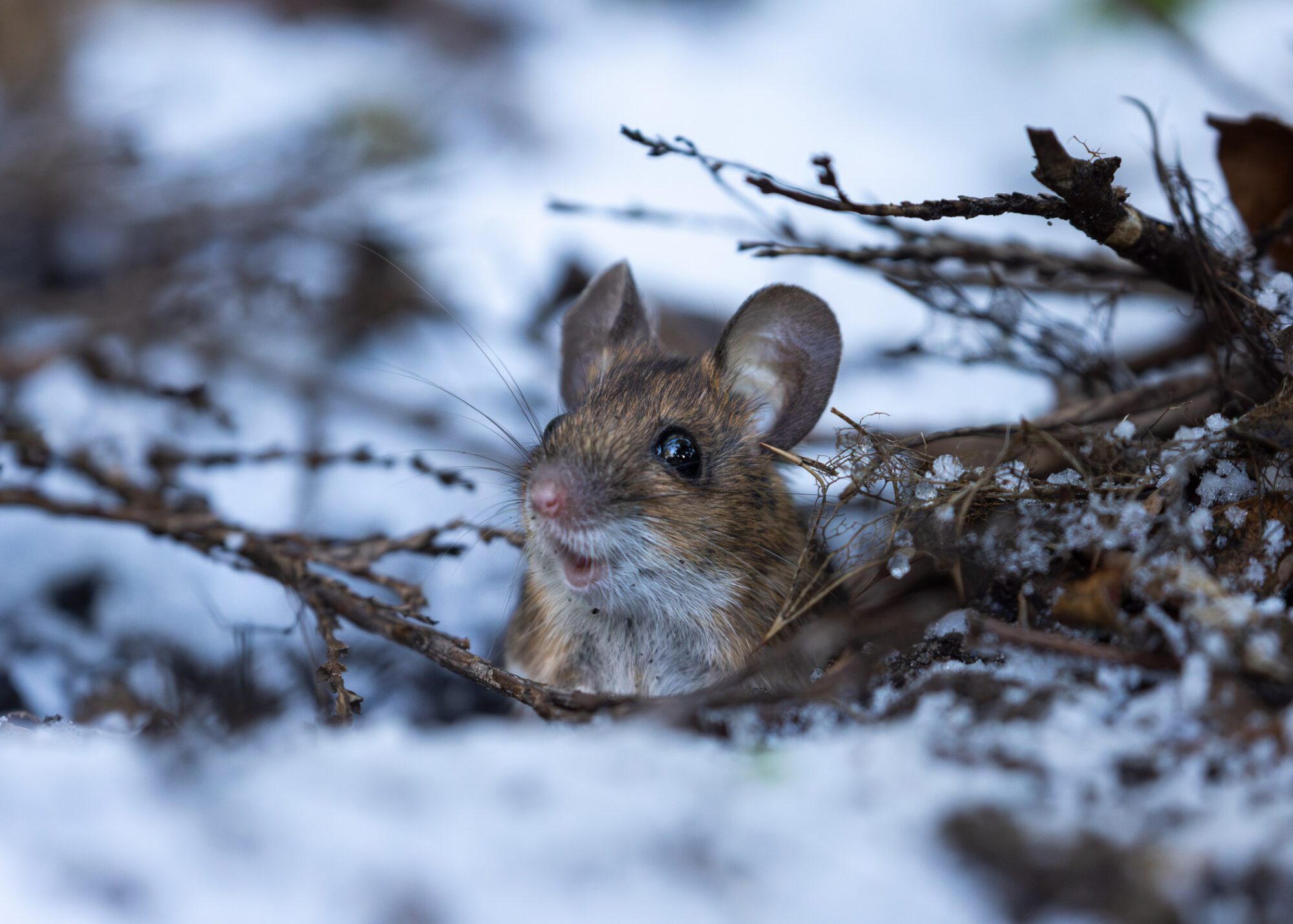
Winter can be a frustrating season for nature photography when the conditions don’t match our expectations. But now and then, winter delivers a fleeting moment of something special, and when it does, you have to make the most of it.
This Field Notes post shows how I capitalised on a very brief spell of wintry weather and used it to my advantage to enhance my wildlife photography.
A Tease of Winter Weather for North West England
We rarely seem to experience dramatic wintry conditions in the North West of England. Most winters, we live our lives under endless stretches of dull grey skies and flat light, leaving us reaching for those vitamin D supplements. However, back in January, we were treated to a light dusting of snow. Major emphasis on the word light. It wasn’t the dramatic transformation photographers dream of, but it was enough to offer a subtle hint of seasonality, and that’s all I needed.
My photography is heavily influenced by seasonal change and its impact on the natural world, so it didn’t take much persuasion for me to grab my camera gear and head out for the afternoon.
Whilst I was walking along the edge of a local ancient woodland, I noticed a small burrow tucked beneath the roots of an old tree, dusted with snow. I knew exactly what had to be done. I took my camera from my bag and lay down in the snow with my 100-400mm telephoto lens trained on the burrow.
The waiting game began. I wasn’t even sure anything would show. But I hoped whatever it was would make an appearance…before I froze to death.
Enduring the Cold Pays Off
After what felt like hours, I checked my watch only to realise barely an hour had passed. During that time, I’d heard nothing but a deafening silence that filled the woodland. The bite of the cold was starting to hit; I was contemplating calling it a day when a faint rustling broke the silence.
Snapping to attention, I honed my senses, searching for the source of the sound. Without warning, a tiny head popped up from the burrow, whiskers twitching, eyes wide open, and mouth ajar. I know it’s leaning on anthropomorphism, but this little fella definitely wore his best shocked face expression. It was like it had gone its life avoiding the camera until that exact moment when it was caught in the act.
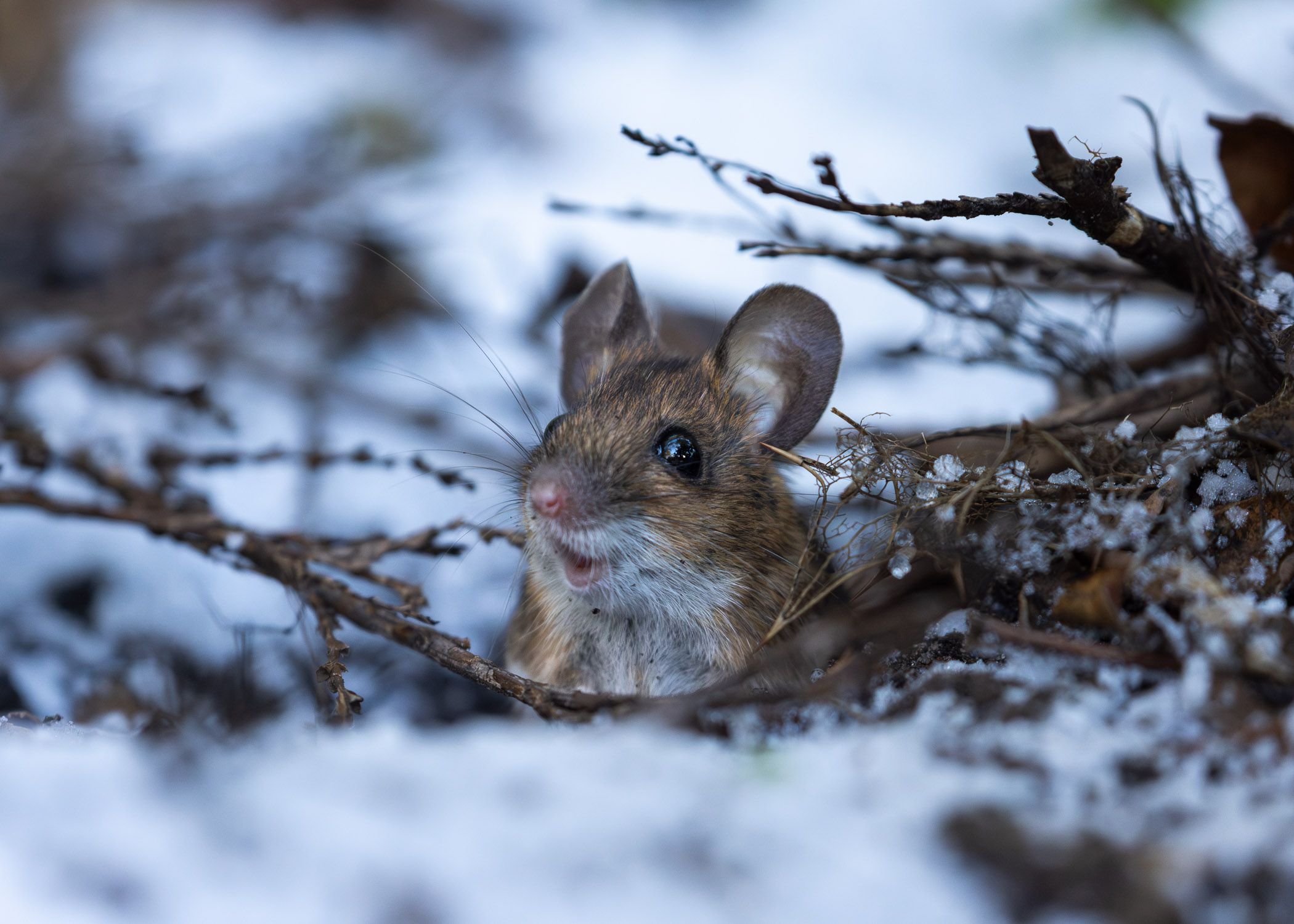
Pretty much immediately, all my self-induced suffering disappeared. The bitter cold, my numb fingertips, the aches from lying prone for so long in my not-so-young-anymore age. All of it faded as I locked eyes with the beautiful, inquisitive creature.
Being extra careful not to make any sudden movements, I captured the intimate moment with a quick press of the shutter. Just as I did, a second wood mouse appeared beside the first. I couldn’t believe my eyes. One of the most adorable encounters of my life, all thanks to patience and enduring the cold.
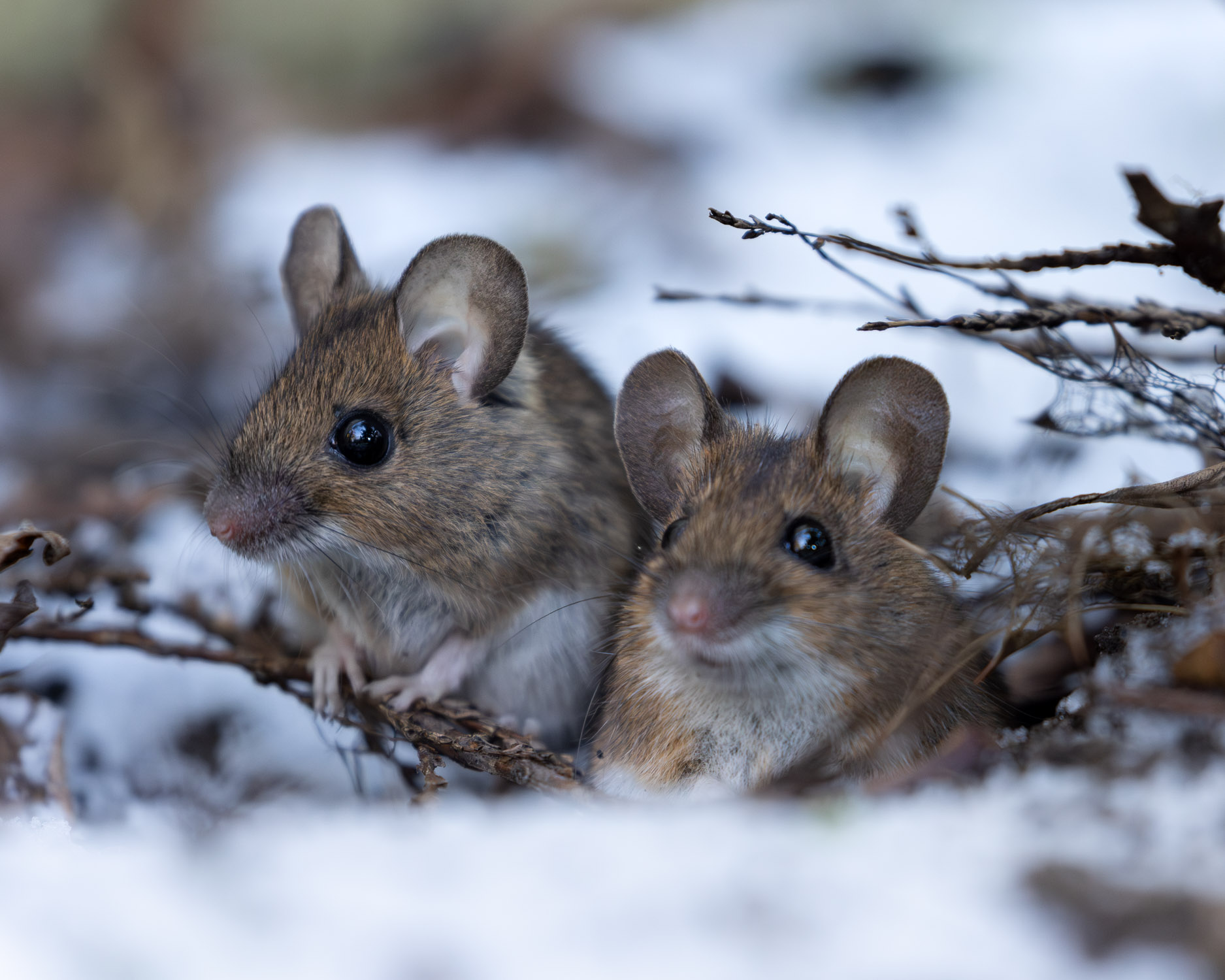
Moments like these are why I place so much value on observation. You can’t predict them, and that’s what makes them so much more memorable.
Technical Camera Settings for Capturing the Wood Mice
I’ll briefly touch on the technical settings for both photographs – nothing too special, but hopefully a useful insight for any budding wildlife photographers.
- Camera body: Canon EOS R5
- Lens: Canon EF 100-400mm f/4.5-5.6L IS II USM paired with the Canon EF 1.4x Extender III
The first image, captioned “A wood mouse peeking out of its burrow with a wide‑eyed, surprised expression at the freshly fallen snow”, was captured with the following settings: ISO 3200, 420mm, f/7.1, 1/200th.
The second image, captioned “Two wood mice emerging cautiously from their snow‑dusted burrow during a rare winter weather window”, was captured with the following settings: ISO 3200, 560mm, f/8, 1/160th.
Both images were captured hand-held using image stabilisation set to the first setting. Shutter speeds were on the slower side, but given the mice’s lack of movement and the fact that I was resting my camera on the ground, I was still able to capture sharp images without risking motion blur or having to push my ISO any higher. Both photographs were minimally post-processed in Lightroom Classic (LrC) to preserve their natural beauty.
Making the Most of What Winter Gives You
Patience and absolute respect for the natural world influence every photograph I take, even at the expense of discomfort and cold extremities. Winter might not deliver dramatic conditions very often here in the North West, but when it does, it completely transforms the landscape and the behaviour of the wildlife within it.
True to form, the winter weather has since returned to its usual routine of grey skies and persistent rain. I’ve found myself obsessively refreshing the daily weather forecasts, hoping for one last taste of winter before we begin the transition into the season of new life.
Moments of opportunity may be few and far between, but that’s exactly what makes them so rewarding. Paired with intimate encounters like the wood mice, even the briefest weather window can lead to experiences and memories you’ll carry with you for life.