After the success of my biggest photography project to date, Wild Rainford, I thought it was finally time to enter my first-ever competition, the British Wildlife Photography Awards (BWPA). This post shares my experiences and lessons learned throughout the submission process.
About the British Wildlife Photography Awards
The British Wildlife Photography Awards (BWPA) is a prestigious annual photographic competition celebrating the beauty and diversity of wildlife found across the UK and the Channel Islands. The BWPA has a strong emphasis on ethical photography and showcases the best of our nation’s wild places and the species that call them home. Photographers submit images across a wide range of categories from behaviour and portraits to habitat, botanical subjects and environmental storytelling.
I’ve been a fan of the BWPA for many years and have most of their annual collections on my bookshelf. It’s a privilege to browse through the sheer beauty of wildlife found across the UK, captured intimately by extremely talented photographers. Regardless of the outcome, it feels surreal to finally be in a position to take part in this year’s BWPA 15 competition.
Why I Entered the British Wildlife Photography Awards
One thing I learned whilst working on Wild Rainford is just how diverse the wildlife on my doorstep is. The more time I spent outdoors, the more I noticed, whether it was new species or intimate behaviour I’d never seen before. It wasn’t long before I started capturing photographs I never could have dreamed of, all within my local area.
I feel I’ve grown more as a photographer throughout the course of this project than I did in the previous five years combined. Keeping it local has taught me the value of patience, fieldcraft, and stepping well and truly outside my comfort zone. Entering the BWPA was, in a way, a bit of a small pat on the back. For the first time in as long as I can remember, I’m genuinely happy with my work, and I wanted to shout about it.
The BWPA also shares my ethical stance on the outdoors. The competition not only raises awareness of the beauty of the UK’s wild world but also gives back to charitable organisations whose sole focus is conservation and safeguarding biodiversity. Entering BWPA 15 wasn’t just a chance to showcase my local nature photography; it was a chance to support a long-established great cause that benefits wildlife and our precious green spaces.
And lastly, it’s a tribute to my Dad. My entire outdoors journey began through my Dad and his love for nature. He was always my number one fan, forever telling me to send my photographs into competitions. Better late than never. This one’s for you, Dad.
How the BWPA Submission Process Works
Until now, I’d never entered a photography competition before, and so naturally I was hesitant. All of those feelings quickly disappeared with the ease of BWPA’s submission process. It really is a smooth process.
First off, you create an account by providing the usual details such as your email address, name, country of residence, and also your Instagram and website URLs, if you have them. Once created, your account becomes your portal, and you can edit your details at any time via your profile.
The Credit System
To begin the submission process, you first need to buy credits. In my case, it was £42 (inc VAT) for twenty-five credits. A single entry into the main competition costs one credit per category. At the time of entering (BWPA 15), categories include:
- Animal Behaviour
- Animal Portraits
- Botanical Britain
- Black & White
- Coast & Marine
- Habitat
- Hidden Britain
- Urban Wildlife
- Wild Woods
In addition to the main competition, the BWPA also hosts a British Seasons competition, which costs four credits per entry for a group of four images, and a Documentary Series, which costs six credits per entry for a group of six images.
I didn’t enter the British Seasons and Documentary Series this year, so my experience is focused on the main competition. Submissions can be entered into multiple categories, with each category costing one credit.
Submitting an Entry
Once you’ve loaded your account with credits, you’re ready to start submitting your hard work. This is the moment to shine.
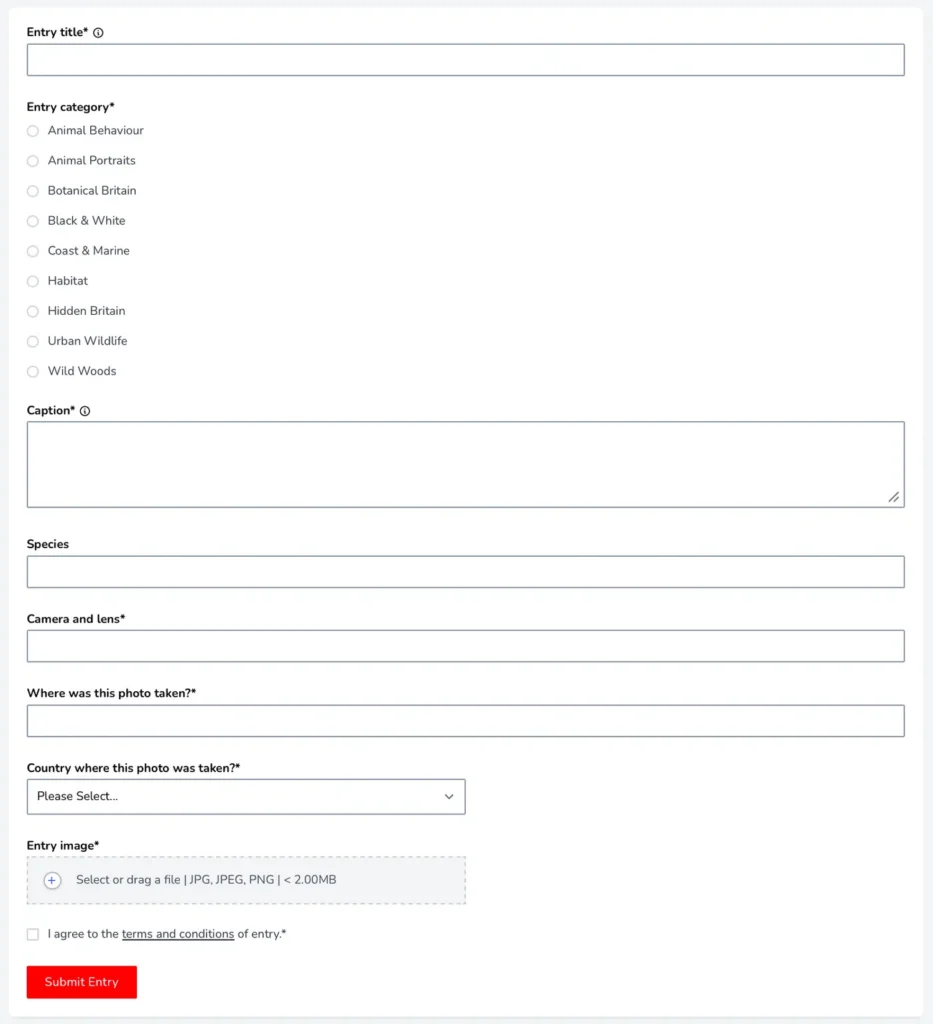
Entry title
The submission process is straightforward and takes little to no time to complete an entry. The first step after selecting one of your portfolio images is to give your work a title; this can be as creative and personal as you like, something that captures the essence of the moment.
Entry category
After titling your work, you then define your image category. This is the category that best defines the work you have captured. You can only select one category per submission, so if you want to enter a specific image in multiple categories, you’ll need to submit a separate entry for each.
That said, BWPA do state on their website that this isn’t always necessary, as judges will often move submissions into alternative categories if they think the image is better suited elsewhere. In my case, I had 25 credits to use, and I didn’t have a unique entry for each, so, for peace of mind and to use up all the credits, I doubled up on categories for relevant images.
Caption
After the image itself, the caption is the most important field on the form, so it’s worth spending a little time to finesse the details. When submitting my work, I used the caption field to provide a very short description of how each image came to life, explaining the unique conditions and the fieldcraft that made each moment memorable. I also included relevant camera settings for each entry.
I think it’s fairly safe to include any information crucial to the creation of your work. The more context you can give the judges as to how the image came to be, the better. I don’t think there’s a specific character limit for captions; if there was, I didn’t hit the threshold, but I did keep my captions concise by avoiding fluff words and low-value content.
Species
Species is pretty self-explanatory: this is a text field to enter the species your work represents. This wasn’t relevant to any of my entries, but for work that features multiple species, I’m guessing you would list each of the dominant species in the box.
Camera and lens
Another straightforward field, this box lists the camera equipment used to produce your photograph. Below is an example of how I structured this field.
Canon EOS R5 & EF 100-400mm f/4.5-5.6L IS II USM
Locational context
The final two fields are location captures. The first is the name of the place where the photograph originated; all of my work was captured on my doorstep, so I listed my village and the specific habitat (nothing too precise to protect sensitive locations). The final field is a drop-down box where you can select the country the photo was taken in (England, Scotland, Northern Ireland, Wales). Remember the BWPA is only open to photographs captured in the UK and Northern Ireland.
Entry image
The image upload feature is the most important part of the submission. Entries need to adhere to image guidelines. The BWPA states that images should be no more than 2,000 pixels on their longest side and less than 2 megabytes in size. Images must also be submitted in JPEG format.
I tagged each of my images in Lightroom with a BWPA tag and exported each to the required specifications beforehand to streamline the process.
Once your image has been uploaded, you’re ready to check the box to agree to the BWPA’s terms and conditions and submit your entry. You can now breathe a sigh of relief before repeating the process for each of your entries.
If for any reason you think you’ve made a mistake or you’d like to upload a different edit after submitting an entry, don’t worry. At any point before the competition end date, you can go into your submission portal and manage your entries. All entries can be fully edited, with the ability to reupload images if required. You can also delete entries if you decide you no longer wish to proceed with a specific entry. Deleting an entry will instantly refund the credit used to your account.
Lessons I Learned from Entering BWPA 15
Confidence in my edits
The biggest challenge I had to overcome when entering my first competition was trusting my edits. I love creating images out in the field, but editing has always felt like my weak spot. I’m forever worried about pushing things too far and moving away from the natural look I strive to achieve.
More than I care to admit, I submitted entries only to convince myself that something looked off five minutes later. This started the vicious cycle of going back into Lightroom and making tiny adjustments. When I say tiny, I’m talking about dropping the blacks by a single point, adjusting highlights by amounts the human eye can’t even detect. I’d then export the new file, which looked nearly identical to the original, reupload to the BWPA entry, and repeat the cycle.
Eventually, I realised I wasn’t improving anything; I was giving in to self-doubt. So I made myself stop, trust in my work, and leave the edits alone.
Prepare captions and titles in advance
After editing, my second biggest struggle is titling my work. I’ve never been a fan of titling my work, probably because I try too hard to come up with a clever pun, which usually ends up being on the edge of cringeworthy. So, as you can imagine, for my BWPA entries, I had to take things a little more seriously, which took longer than I’d have liked.
Titling photographs and writing captions in advance will save so much time and stress. By creating captions as soon as I take a photograph, I can be sure I’m not missing any of the important details. My feelings during the encounter, the small details that built up to the opportunity, and the fieldcraft that led me to the moment.
A Glance at Some of My Entries
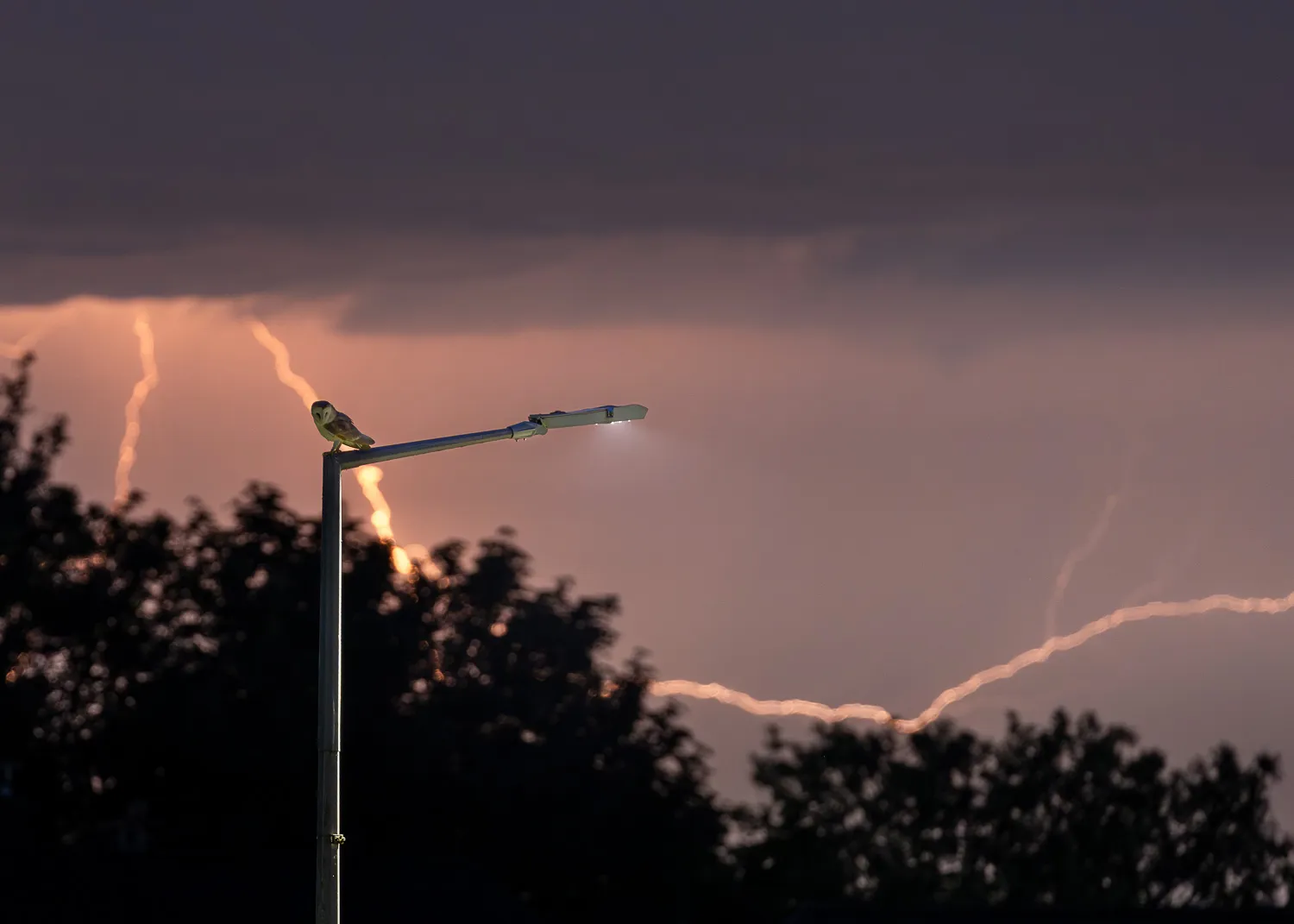
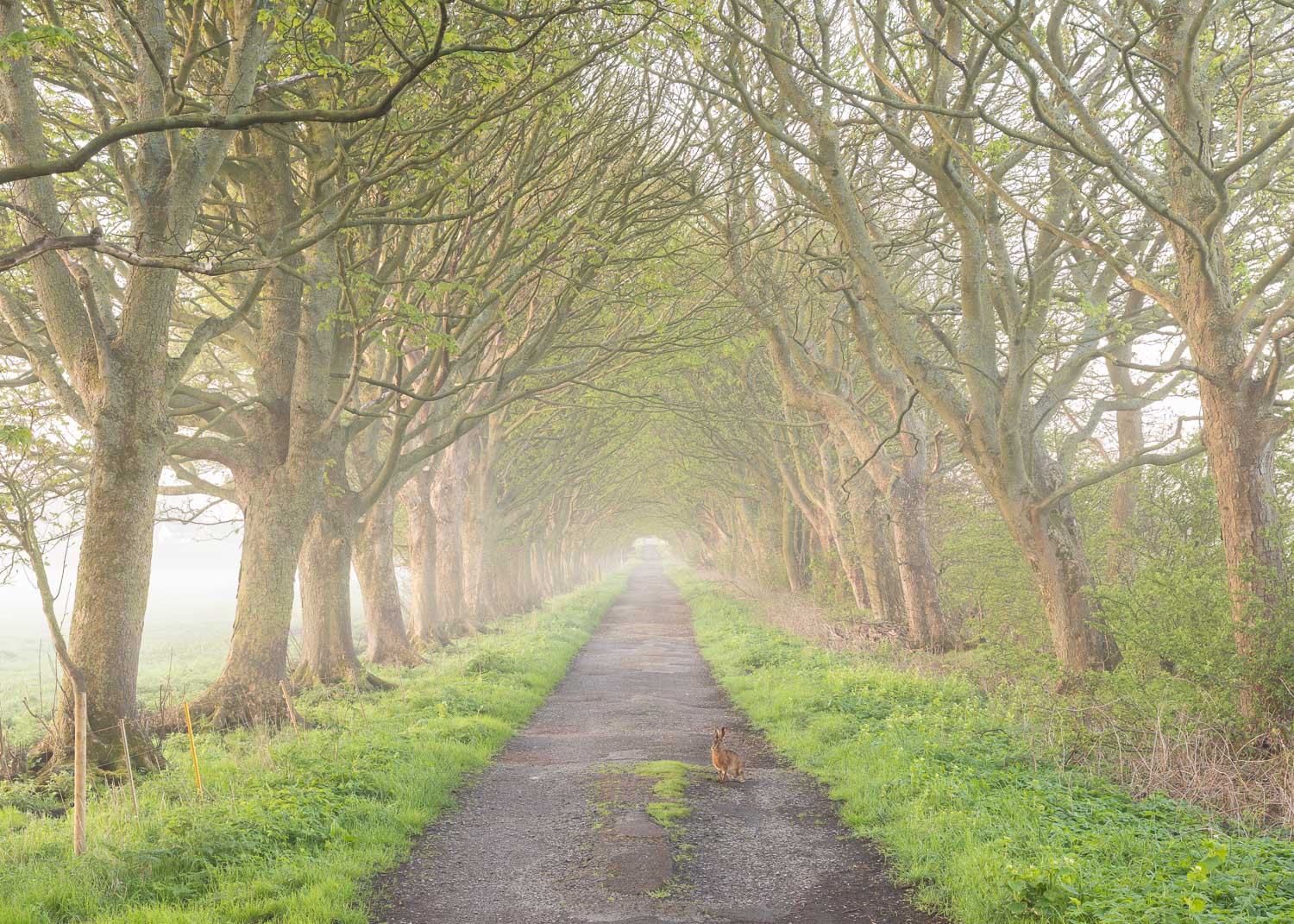
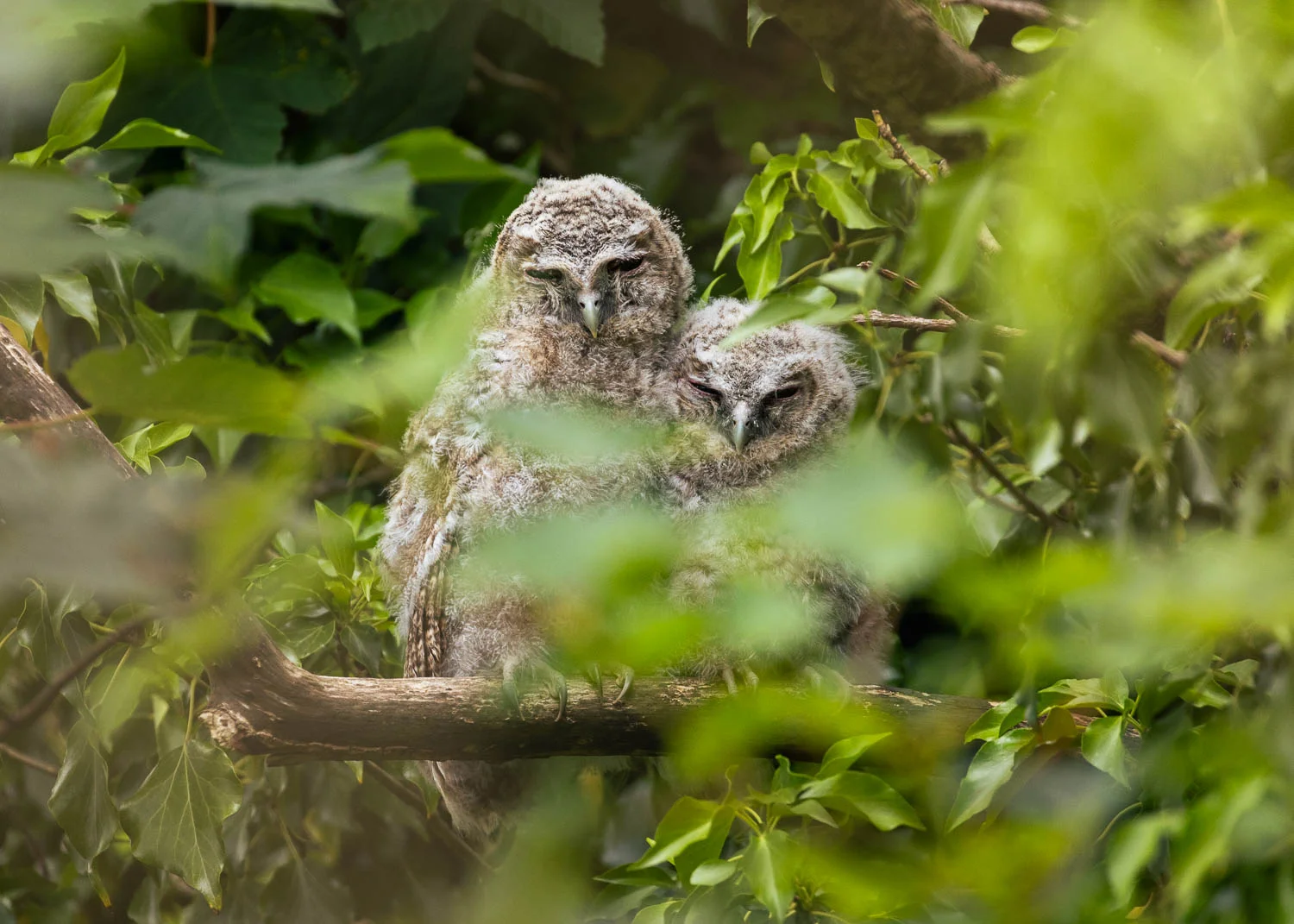
I won’t list them all, but here’s a peek at a handful of entries I submitted to BWPA 15. In all, I submitted fifteen unique images, each one captured on my doorstep, showcasing the beauty of local nature. I’m unbelievably proud to have finally entered my first photography competition, one that cares for nature as much as I do.
Regardless of the outcome, I’ve learned so much about nature and myself throughout my project, Wild Rainford, and I’ll continue to do everything I can to share the beauty of the great outdoors. Good luck to everyone who has entered BWPA 15!