
Nature photography is a journey of discovery that begins with hours upon hours of fieldcraft and observations. We spend so much of our time perfecting our craft and capturing emotional moments in nature. For most of us, the journey ends with a photograph. But it doesn’t have to. We can take it one step further and contribute towards conservation.
Through scientific platforms such as BirdTrack by the BTO (British Trust for Ornithology), we can turn our sightings into invaluable records that help map wildlife across our area. This data can then be used to inform regional and national population trends and identify species that are thriving, declining, or in desperate need of help.
As nature photographers, we probably spend more time outdoors than most, and that puts us in a prime position to make a real difference. In this post, I talk about how I use apps like BirdTrack to support BTO science and wildlife on my doorstep.
Photographing Wildlife and Recording Sightings in Merseyside
Last week, I headed out on my bicycle with my camera, no real plan and no subject in mind. It was more of a see what I can see kind of afternoon. I headed straight for one of my usual haunts here in Rainford Village; I won’t disclose the exact location because it borders on private land and it’s sensitive to disruption.
As soon as I arrived at the location, I hopped off my bike and gently laid it down out of the way. The first thing I did was unlock my phone and open Merlin Bird ID. I’ll talk about this app in more detail later in this post. I’m pretty familiar with most bird calls on my doorstep, so I don’t really use the app for ID as such. It’s more for a complete session record of everything I hear whilst out in the field. Sometimes I have a habit of focusing on specific calls and missing others.
Happy that Merlin was set up and recording in the background, I retrieved my camera from my bag and dialled in my default wildlife settings. Now began the waiting game, arguably the most relaxing part of spending time outdoors. I ducked down amongst the long meadow edges, wrapped a camo scrim around my camera and lens and settled down to enjoy the afternoon.
Capturing a Moment with Yellow Wagtails
The weather could not have been any more perfect. There was a slight breeze, which kept the air cooler without drowning out the calls of the surrounding wildlife. I couldn’t have been sitting there any longer than fifteen minutes when I heard a distinct call. One that I hadn’t heard for a long time, at least in this specific location. The yellow wagtail. Or should I say yellow wagtails, as there was definitely more than one.
Yellow wagtails are sadly declining in population, resulting in them being placed on the red list as a species of concern. Hearing their nearby calls was heartwarming, and just like that, I’d found my subject. I didn’t make any sudden movements; I find wagtails tend to be quite skittish and will quickly flee if disturbed. I waited for them to come to me, and it didn’t take long at all.
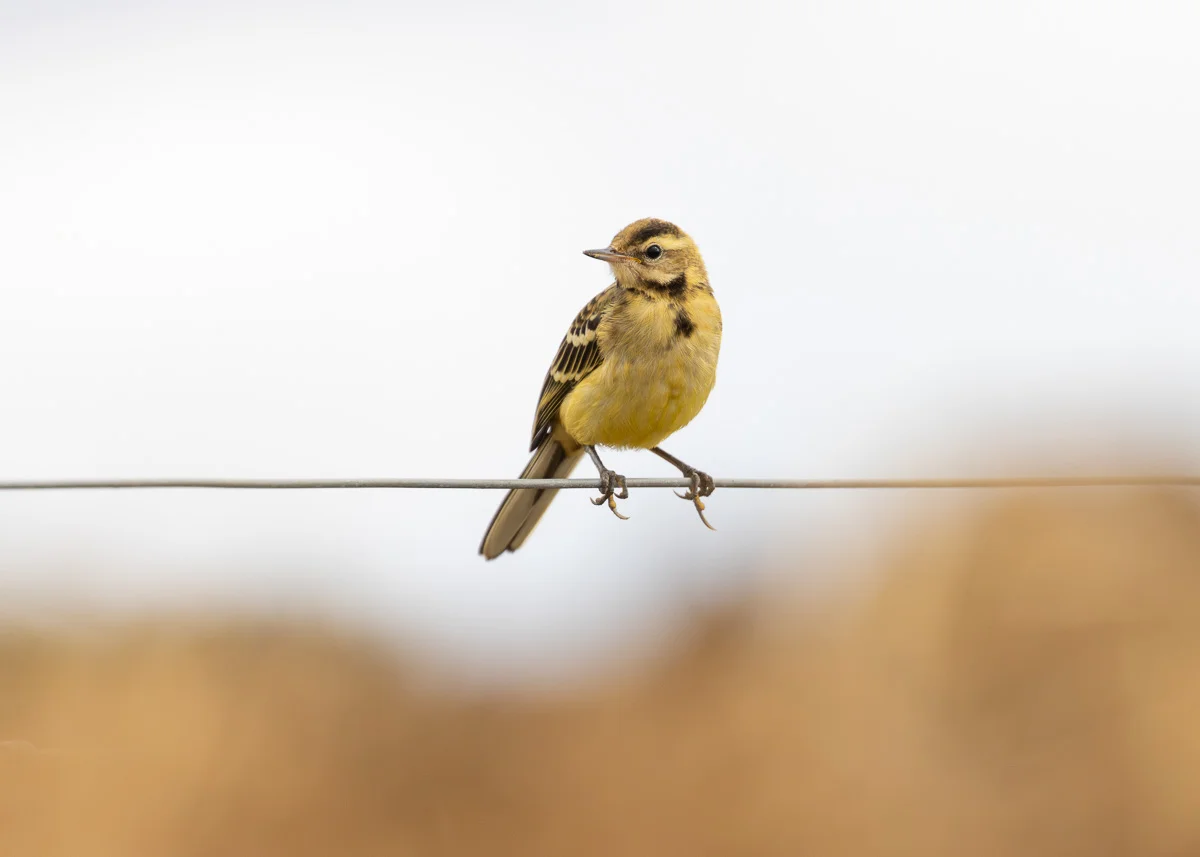
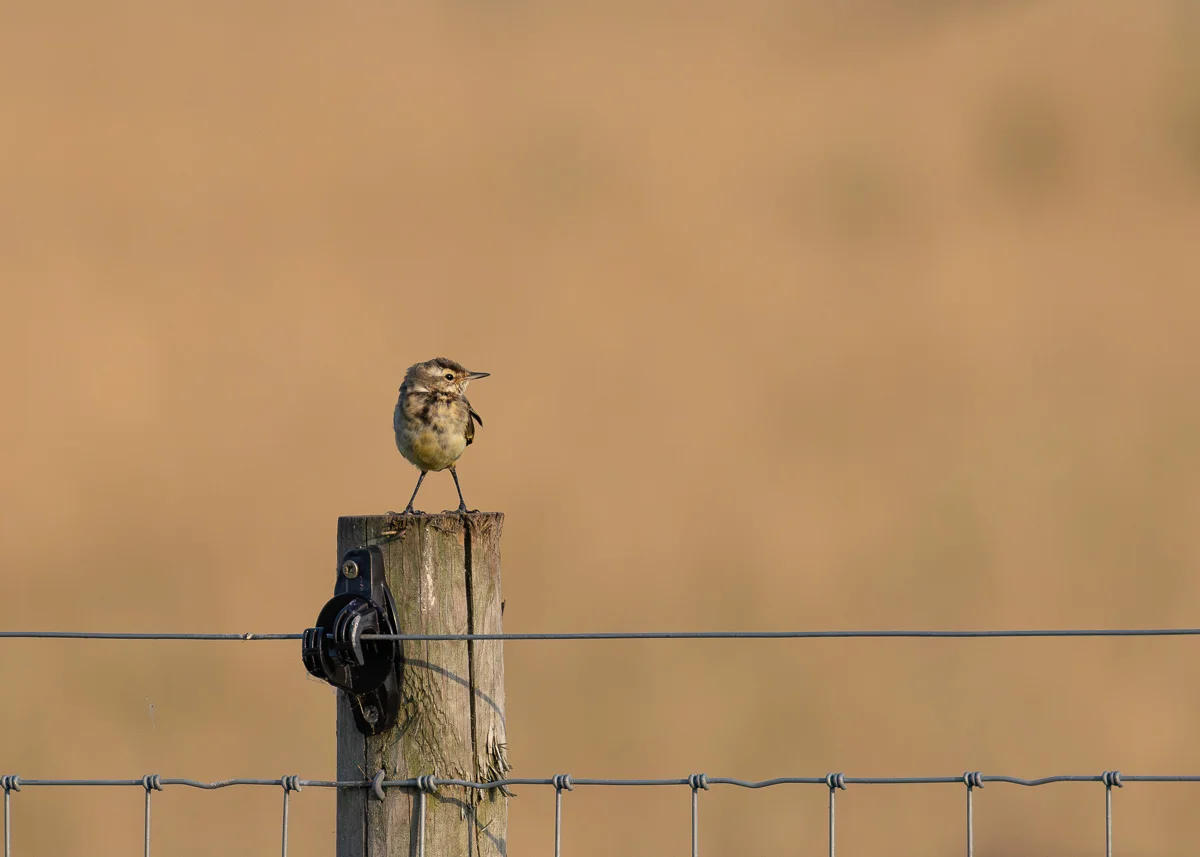
As I sat amongst the grasses, a juvenile flew in and perched on a fence wire. It couldn’t have been any more than 5 metres away. I captured a close-up portrait of the yellow wagtail before realising that more of them had arrived, hunting for insects amongst the piles of horse manure. I photographed a few opportune moments as they went about their normal behaviour before I noticed a straggler perched on a distant fence post.
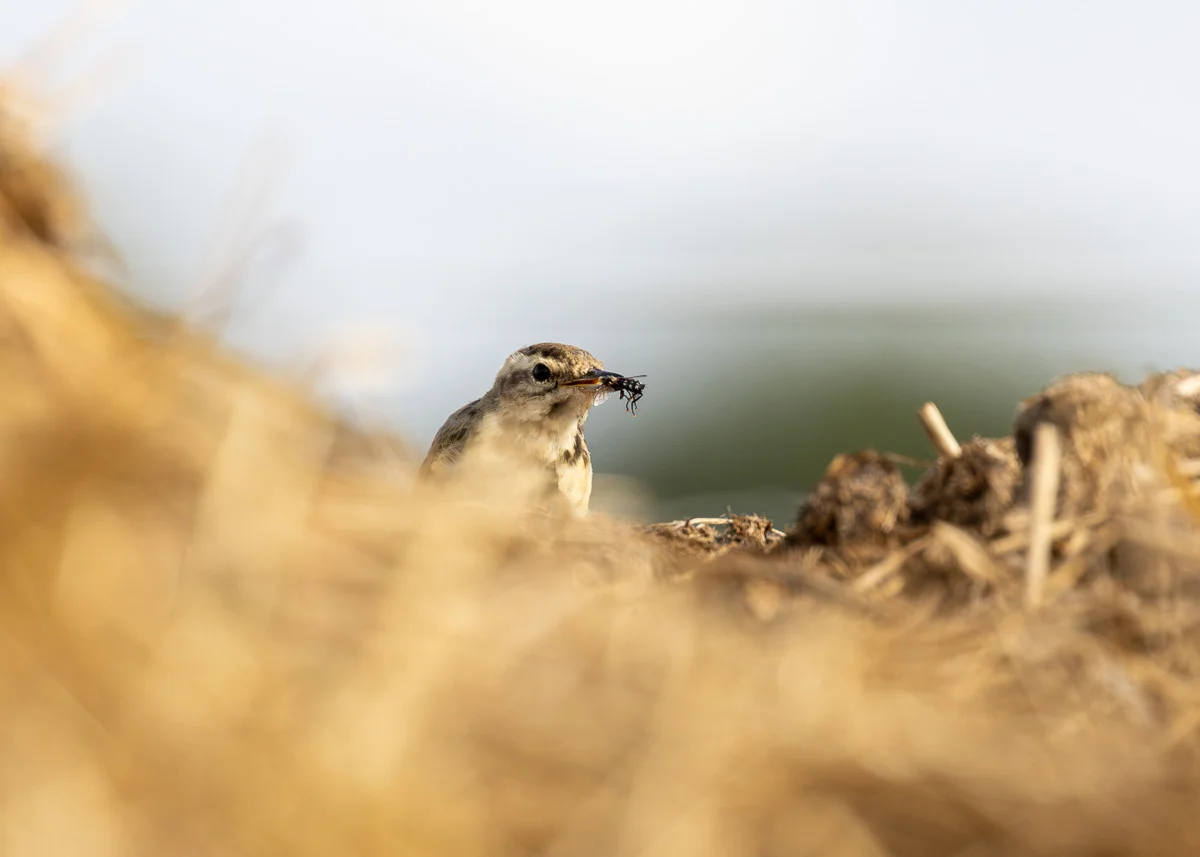
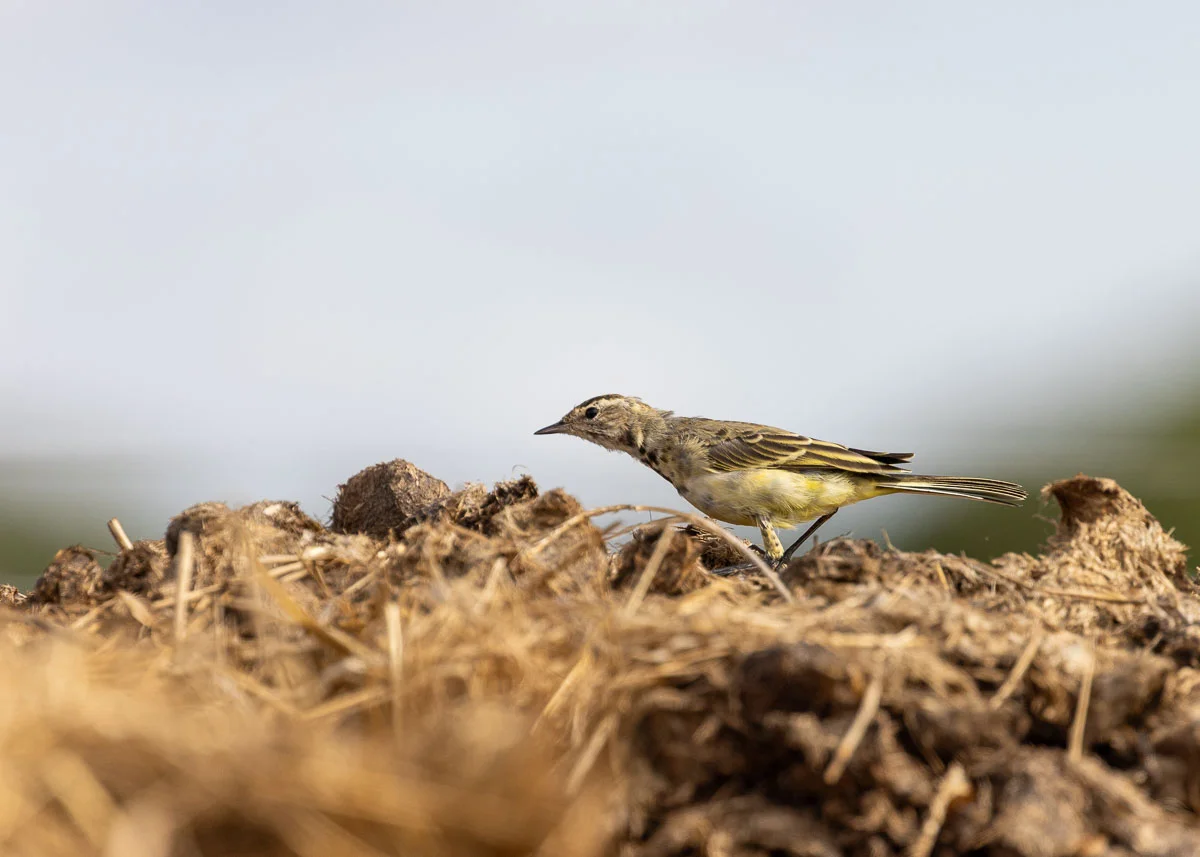
The straggler was tiny! A fledgling yellow wagtail had perched delicately in the distance, watching its siblings hunt. Happy with the photos I’d captured, I set about logging my sightings in the BirdTrack app.
What is BirdTrack and Why Should You Use It?
BirdTrack, for those who don’t know, is a scientific data collection app published by the British Trust for Ornithology. It allows volunteers to upload GPS-tagged wildlife sightings. These sightings are collated and used to analyse population trends of our native and migratory species. Although BirdTrack is primarily used to record bird sightings, it also allows users to record mammals and insects.
Once uploaded, sightings become publicly visible, but don’t worry. You can mark select records as sensitive. This prevents the record from becoming publicly visible and ensures the data is still counted towards the regional and national analysis. So, for subjects such as birds of prey and other sensitive species you have worked hard to locate, you can keep their locations private and sleep well knowing your sightings are supporting conservation without risking disruption.
When adding records, try to be as accurate as possible. If you’re unsure of a particular species you’ve seen, take a quick record photograph and do your best to get a positive ID from an expert. Local or national wildlife groups on Facebook are generally a good place to start.
Recording My Yellow Wagtail Sighting on BirdTrack
It was time to reluctantly put down my camera and do my bit for conservation. I opened the BirdTrack app and tapped “Add record” and “New list”. From the “Visit details” screen, I logged my location via GPS and entered my session start time. Now it was time for the bit that really matters: recording my sightings by tapping “Add species”.
It’s a pretty straightforward job, adding new species. You can either manually scroll through the list or use the search feature. I always opt for the search feature because it’s quicker. In the screenshot below, you can see some of the species and counts I recorded during the session, including the yellow wagtails. In some of the boxes, you’ll notice a number followed by a +, which means the count was at least this value, but likely more.
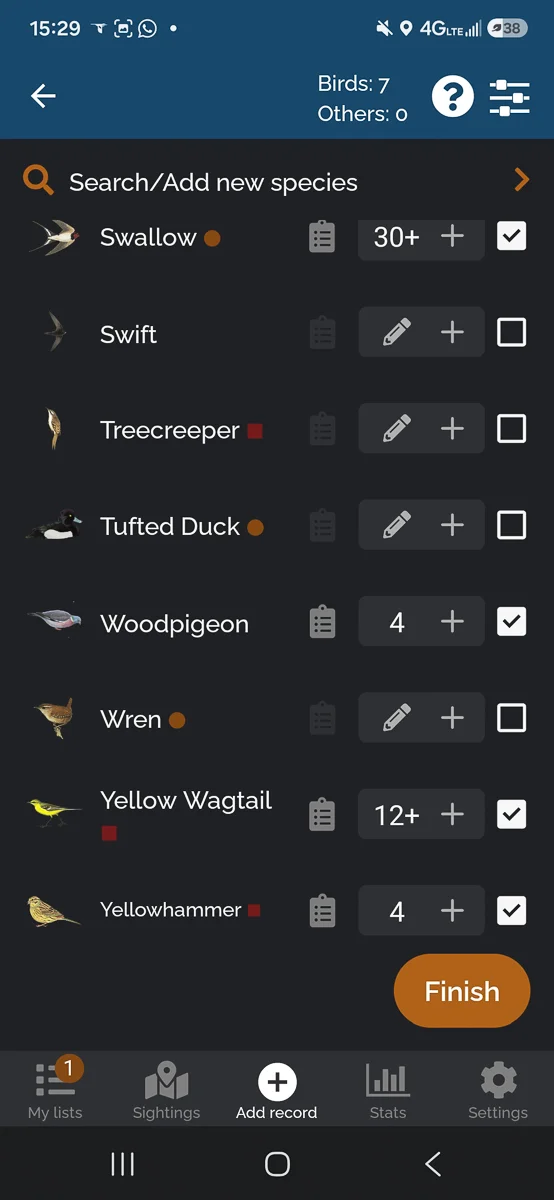
Before finishing my counts, I marked the yellow wagtails as a sensitive record by tapping the clipboard symbol on the left side of the count boxes. This gave me peace of mind that the record was hidden from public view, minimising any risk of disruption. I also had to remember I was on private land with permission, and I had a duty to protect the landowner’s privacy.
And that’s pretty much all there is to it. A couple of minutes of my time to support local conservation. What a way to end a successful outing with my camera.
Merlin Bird ID and its Use in Wildlife Photography
Earlier in this post, I briefly mentioned Merlin Bird ID. Merlin is a free, well-known audio recording app that you can run on your phone whilst enjoying the outdoors. Using audio recognition, the app identifies bird species from their calls and presents you with a list of species detected during the recording session. It’s reliably accurate, as long as your region is set correctly to limit the audio matches. In rare circumstances, background noise can trigger false records.
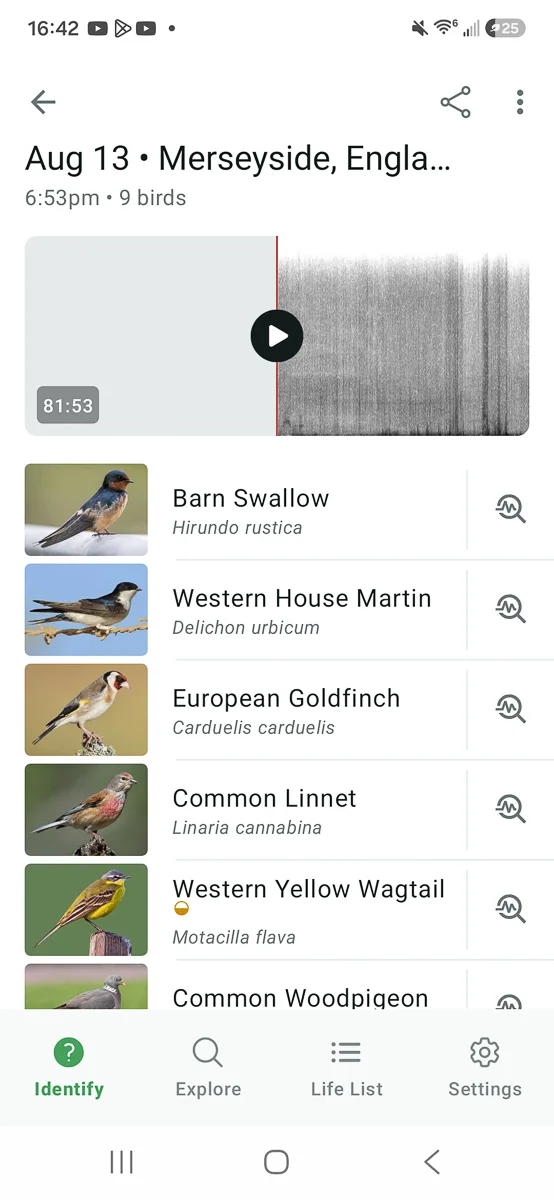
Merlin is a phenomenal app for anyone just starting in wildlife photography. It’s a tool that helps you build the foundations for fieldcraft. Over time, you’ll be able to identify distant bird calls without needing a visual sighting, and that honestly is half the battle. Knowing what to listen for helps to guide your decision-making when it comes to wildlife photography out in the field.
I should say, I never use Merlin to feed my BirdTrack records. I only log sightings I have seen with my own two eyes. BirdTrack depends on accuracy, so confirmed sightings are essential to map wildlife as accurately as possible. I tend to use Merlin to passively record sessions whilst I’m heavily focused on a specific subject. That way, if I miss anything, I can save the audio recording and replay the exact moment anything interesting popped up.
Two Apps Every Nature Photographer Should Use to Benefit Conservation
Merlin Bird ID and BirdTrack are two apps that every nature photographer should have installed on their phone. If you care about making a difference as a nature photographer, BirdTrack in particular fills that role effortlessly.
By using BirdTrack, we can make a real difference to local and national conservation. Every record we submit provides a vital piece of the puzzle, showing how certain species are distributed throughout the year. Ultimately, the data we submit helps drive conservation projects to protect critically endangered species on both local and national levels. The best part is, it only takes a couple of minutes to submit records. That’s not a bad price to pay to support the wildlife we photograph, is it?
Merlin, on the other hand, acts as an auditory scout. It allows you to train your fieldcraft skills through audio recognition. Once you become familiar with the species on your doorstep, you’ll realise that certain birds give audio cues before moving or performing a certain behaviour. You can use this knowledge to guide your photography and become more successful out in the field.
Both apps are free, with no catches or spammy advertisements. Together, they’re easily two of the most-used apps on my phone, and for good reason.