
One of my favourite aspects of nature photography is the sheer diversity of subjects. One moment I can be out in the Lake District fells photographing mountainous landscapes at sunrise, and the next, hunkered down in grassy margins watching local barn owls quarter a meadow. Whatever my subject, one rule was drilled into me from a young age: expect the unexpected. Nature does what it wants when it wants, and as a photographer, it’s my job to stay alert and adapt to opportunities as they arise.
This post is a real-life example of how fast things can change in nature photography when you’re out in the field. One single moment of tunnel vision can lead to missed opportunities, and that’s exactly what happened to me whilst I was out photographing house martins over a local wheat field earlier this week.
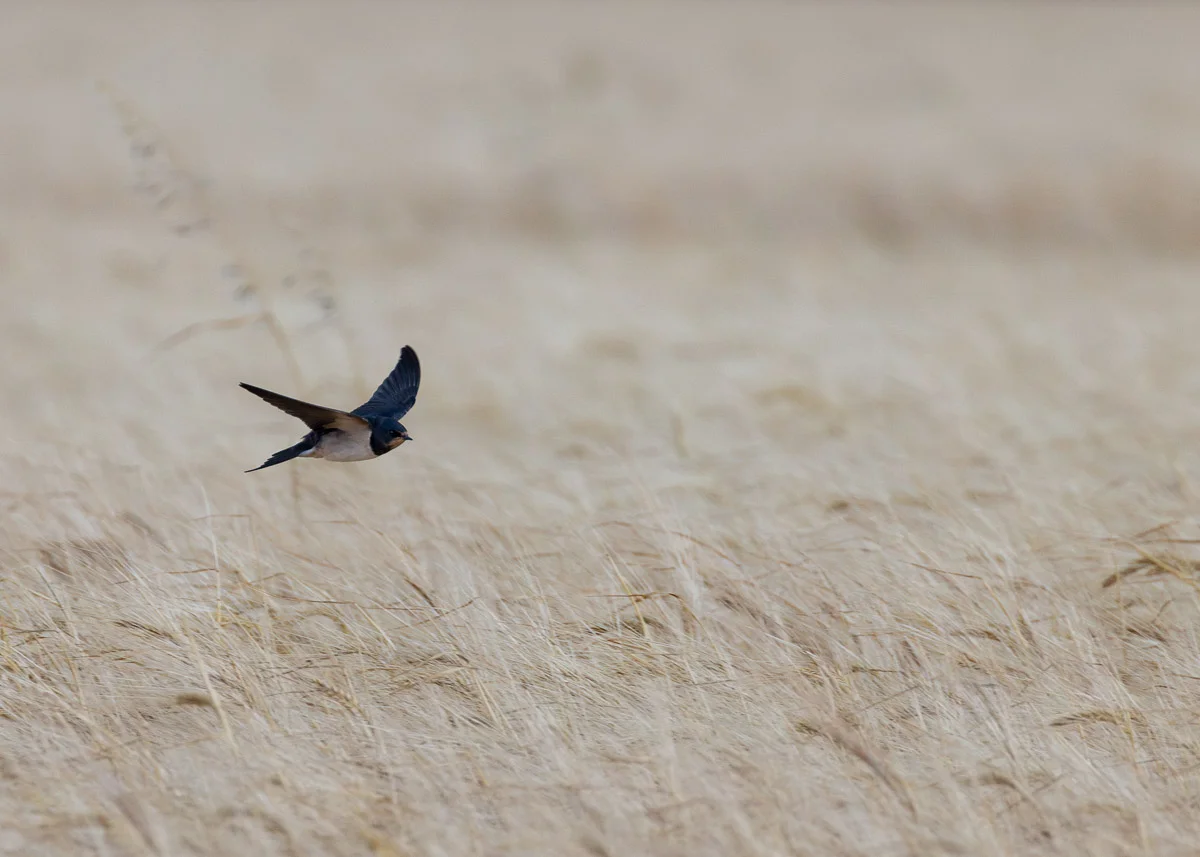
Photographing House Martins and Swallows Over a Local Wheat Field
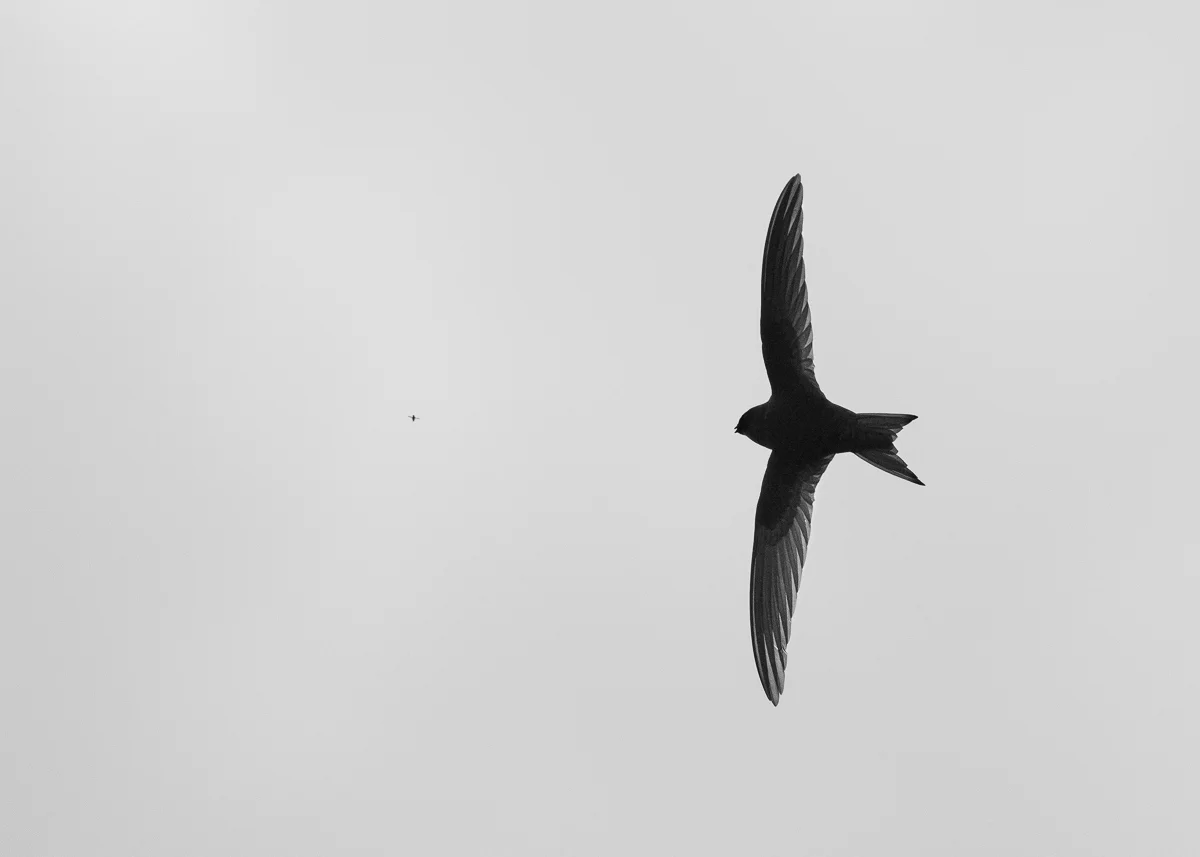
It’s been a great summer for swifts, swallows, and house martins around Rainford Village this year. Last year was dire; I can’t recall seeing a single swift, so it’s great to see them on a bit of a rebound. With cereal crops quickly approaching harvest time, I noticed a large flight of swallows and house martins regularly swooping across the tops of the wheat fields, scooping up insects on the wing. With a bit of luck and perfect timing, I knew there was a photo to be had, so I dedicated most evenings to sitting alongside the crop fields, watching the birds do their thing.
Camera settings and technique for photographing swallows and house martins
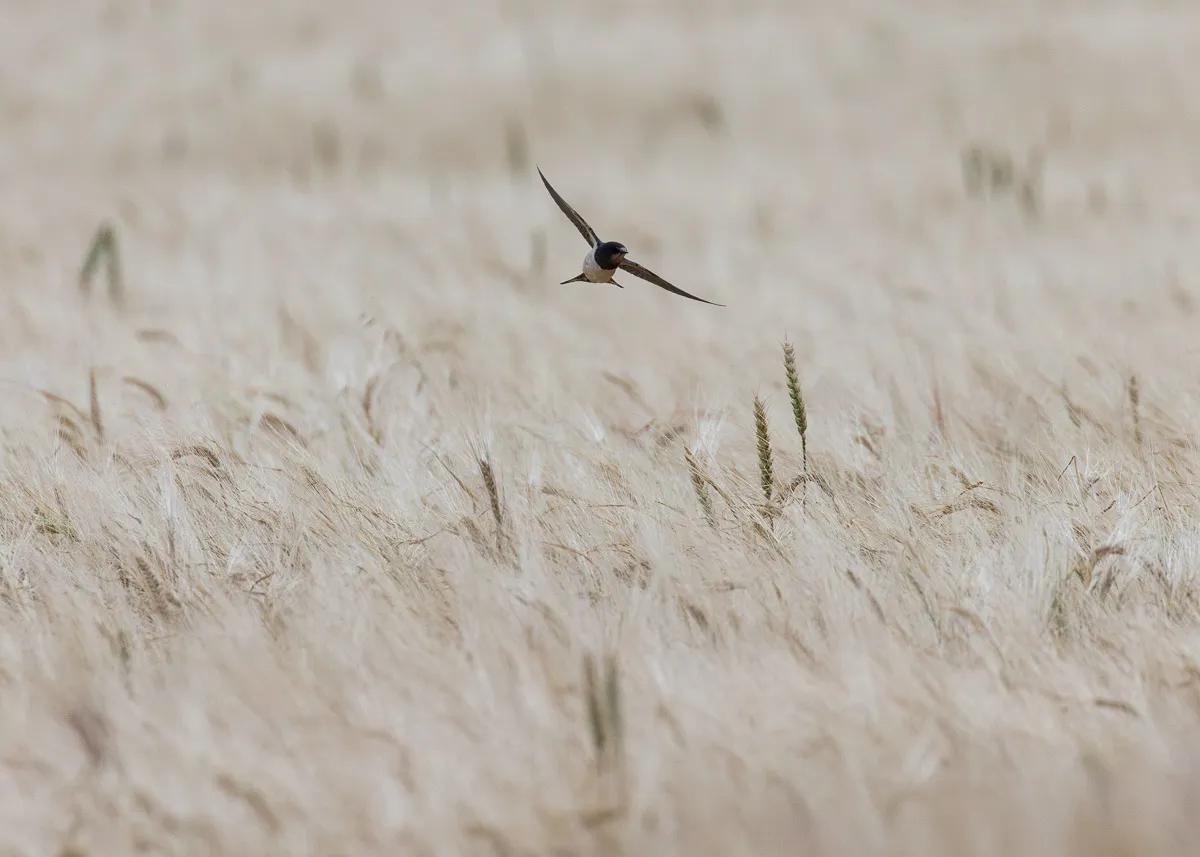
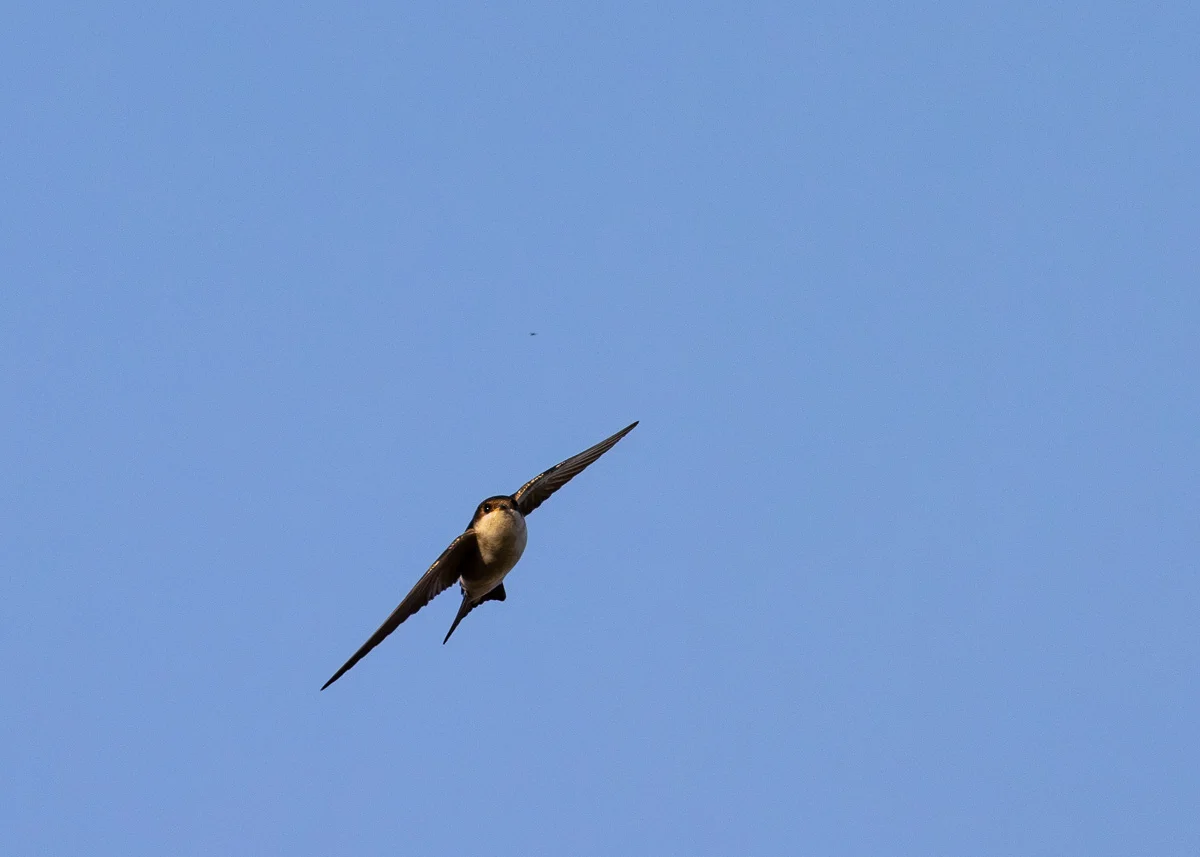
My approach was pretty straightforward. I pitched up with my camera and long lens midway along the field on a public path with my back to the sun, and waited for them to cycle round. After spending a little time watching, I worked out a rough route that they were using that gave me the best chances of photographing them without moving. Even so, it was far from easy. If you’ve ever tried to photograph swifts, swallows, or house martins, you’ll know they’re lightning fast, so you need plenty of patience and lots of light! Expect plenty of empty sky photos and out-of-focus masterpieces.
Camera settings-wise, for this shoot in particular, it was all about freezing motion, so a fast shutter speed was the priority. I opted for manual mode, a shutter speed between 1/2500 and 1/4000th, aperture wide open at f/5.6, and ISO set to auto. Depending on the backdrop and direction of travel relative to the light, the only setting I had to tweak on the fly was exposure compensation, which varied from -2 to +2 EV. Tracking was set to subject detection (animals), AF servo, and a reasonably sticky AF tracking setting to prevent focus from being dragged by environmental features.
As they cycled round, I’d pick out a single bird from the flock and track it until it was in the right position to photograph. It wasn’t entirely foolproof, but it was better than the headless chicken approach of switching to the closest bird as a group of twenty-plus swoop past you in rapid succession. I spent hours chasing the dream photograph, and it’s fair to say that tunnel vision kicked in, which is unusual for me. I was so focused on not missing the chance to capture the house martins that I was completely oblivious to the silent predator lurking in the nearby trees.
The Sparrowhawk Attack That Caught Me Off Guard
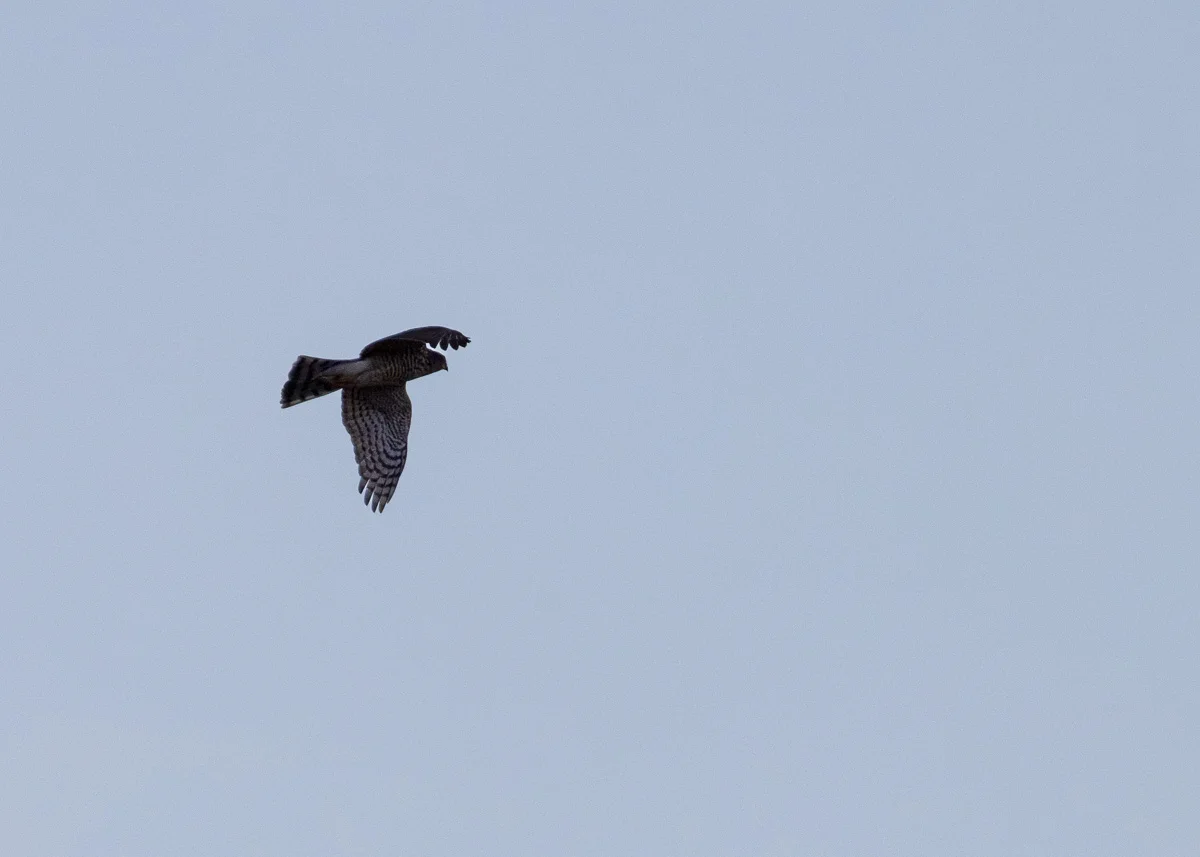
I tracked the flock of house martins as they made pass after pass across the wheat field. On one particular pass, without any warning at all, the flock soared upwards, scattering in all directions whilst calling out frantically. It was only then that I realised a sparrowhawk had swooped in low, attempting to blindside one of the house martins. I didn’t even see the sparrowhawk approach; it hadn’t just caught the house martins off guard, it caught me too.
Luckily, I happened to be looking in the right direction, so I saw the drama unfold. It was exactly what you’d expect from an unprompted ambush: absolute chaos. I didn’t even have a chance to react, let alone raise my camera. I just stood there slightly confused but mostly in awe of what just happened in front of me.
When my brain finally caught up, I managed to raise my camera and capture a record shot of the sparrowhawk flying off empty-handed. It now serves as a bitter reminder of the time I forgot about nature photography’s most important rule: expect the unexpected.
Why You Should Always Expect the Unexpected in Nature Photography
In my experience, you can only plan your nature photography shoots so much. It’s natural to want to be in full control, but realistically, we’re never fully in control. We’re at the mercy of the weather and whatever else decides to show up in the moment. Unexpected changes and surprise visitors can and will often produce the most memorable photographs, as long as we’re on the ball and ready to catch them.
Some of my favourite moments behind the lens came from reacting to unexpected conditions and keeping an open mind. One moment that stands out was an early autumnal morning on Loughrigg Fell in the Lake District, when the humidity, dew point, and wind speed all came together to deliver quite possibly the best temperature inversion I’ve ever seen. And more recently, an encounter with a barn owl hunting from a lamppost in a thunderstorm right on my doorstep. If I’d stuck to my original plans, I’d never have been able to capture either image.
In a nutshell, always keep an open mind and be ready for those moments that pop up with little to no warning. Expect the unexpected.
Learn More About Ethical Nature Photography
My Field Notes posts are pretty much rough-and-ready content. The featured photographs are rarely my best work, but they reflect real moments out in the field. Not every trip leads to an image, especially a portfolio-worthy image, which is what I’m hoping to show through my content.
If this post has ignited a flame for wildlife photography, it’s worth reading through my ethical nature photography guides. I regularly publish ethical guides based on real-life, out-in-the-field experiences that give you all the information you need for success. I’ll pop a few links below to some of my most in-depth and valuable guides that will genuinely open the door to nature photography.
Learn how to photograph barn owls respectfully
Photographing tawny owlets ethically