
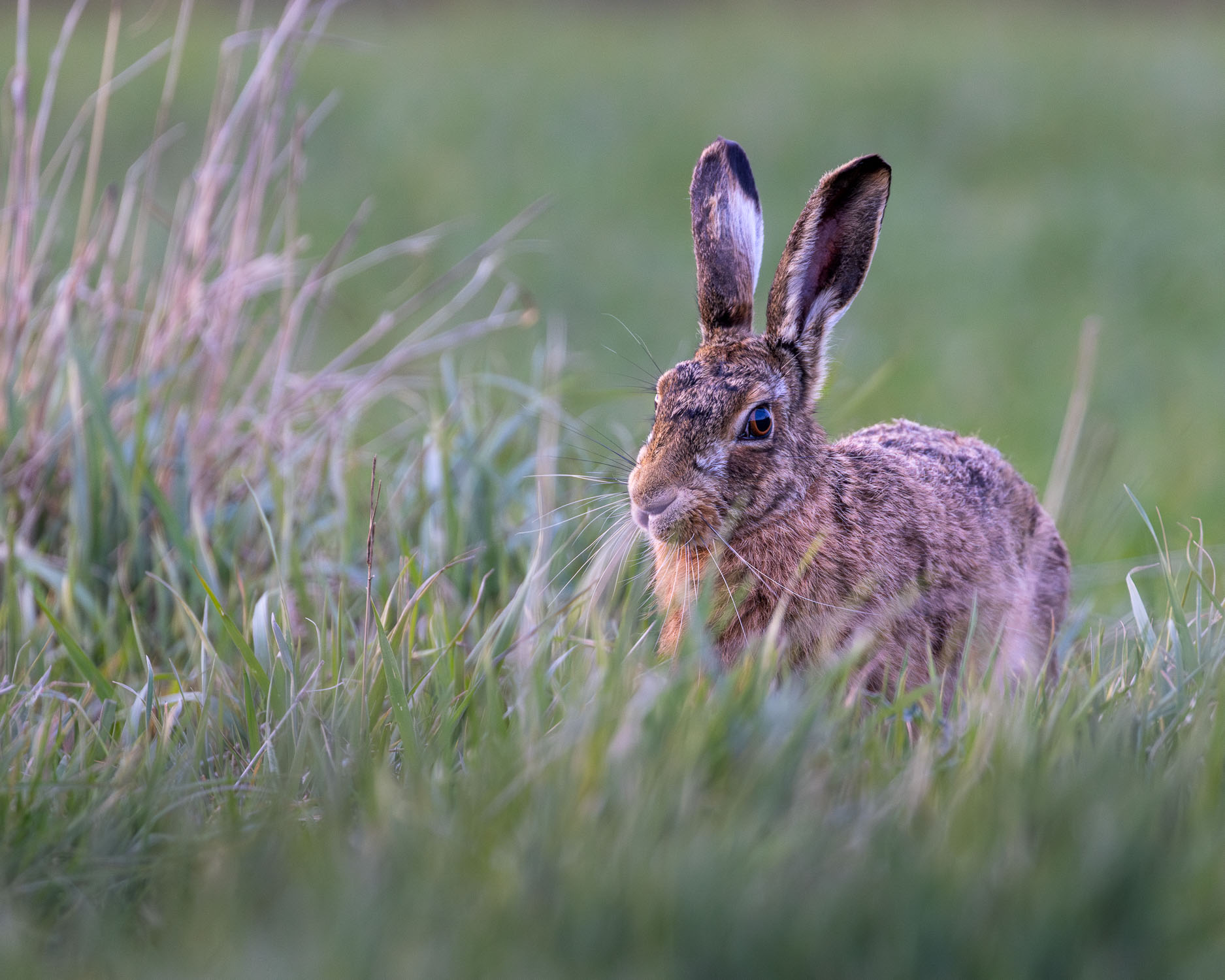
This Field Notes entry is all about my month-long mission to photograph mad March hares right on my doorstep in a beautiful countryside setting. It was a journey of self-doubt and second-guessing, quite possibly my most challenging project yet, but unbelievably rewarding.
Spring has finally sprung. Wow, what a difference a couple of weeks makes.
After a dull, wet and miserable winter, life has finally returned to the English countryside. I can’t tell you how much I’ve missed hearing the dawn chorus, and don’t get me started on the wildflowers. We’ve seen some early bloomers this year, I guess due to the mild winter. Either way, it’s lovely to see delicate pastel colours returning to the countryside.
What better way to mark spring’s arrival than spending time out in the field watching and photographing European brown hares? Not just any hares, mad March hares. The crazy season, synonymous with “boxing hares”.
Since the start of March, and when the weather has allowed, I’ve been hunkered down in a local field observing and trying to capture boxing hares on camera. I couldn’t tell you how many hours I’ve spent sitting on the edge of a local meadow, hoping to catch a glimpse of this iconic behaviour.
As the days and weeks quickly trickled by, I soon realised this project wasn’t going to be as easy as I thought.
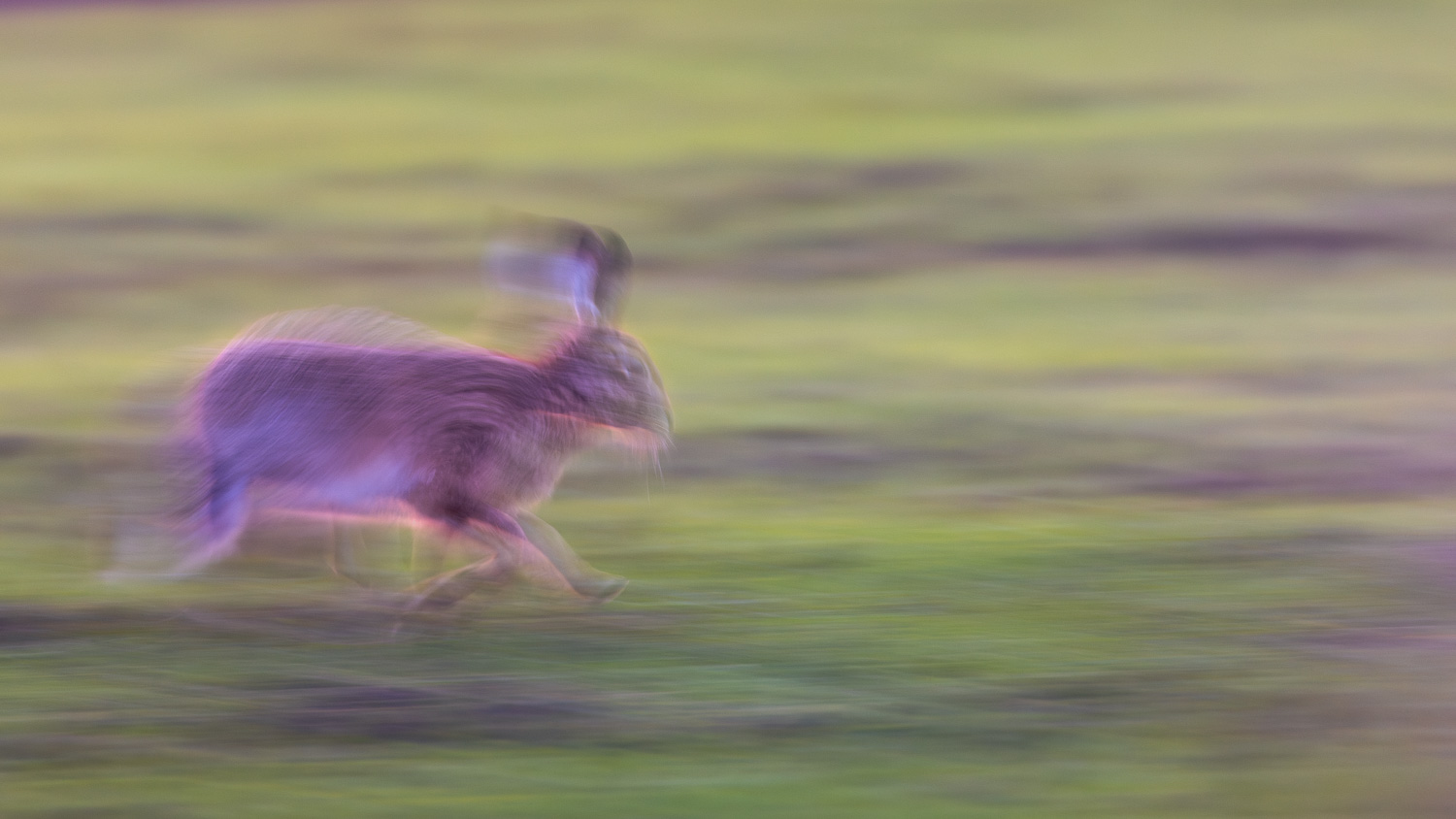
Above: I really enjoy creating images that are a little different and emphasise a specific quality of my subject. In this case, the hare’s explosive speed. Captured at 560mm, ISO 400, f/11, 1/10s.
The Meaning Behind “Mad as a March Hare”
You’ve probably heard the saying “mad as a March hare”, but what does it actually mean?
The phrase dates back centuries and illustrates the erratic behaviour hares display as they enter their peak breeding season in March. At this time of year, they’re fired up and full of energy, especially males. Sometimes this pent-up energy proves to be too much, leading to explosive boxing matches.
Contrary to popular belief, boxing hares are usually females fending off the unwanted attention of overly eager males. It’s an incredibly raw moment for wildlife photographers to witness, and one which I’ve personally been trying to capture on camera for years.
Capturing the March Madness from a Wild Meadow
I’m fortunate to live in a countryside setting surrounded by woodlands and rolling fields, but that doesn’t necessarily make it easier to capture dramatic moments in nature. As spring brings about the mad March hares, it also marks one of the busiest periods for agricultural work. Surrounding crop fields begin their usual preparation cycle, being treated, raked, and sown. It’s a harsh and disruptive process that, unfortunately, impacts our beloved brown hares.
To avoid the disruption and give myself the best possible chance, I needed a natural location that offered hares a safe, undisturbed haven, and I knew just the spot. A local wild meadow tucked away at the edge of a woodland, which I was kindly granted access to by the landowner a couple of years ago.
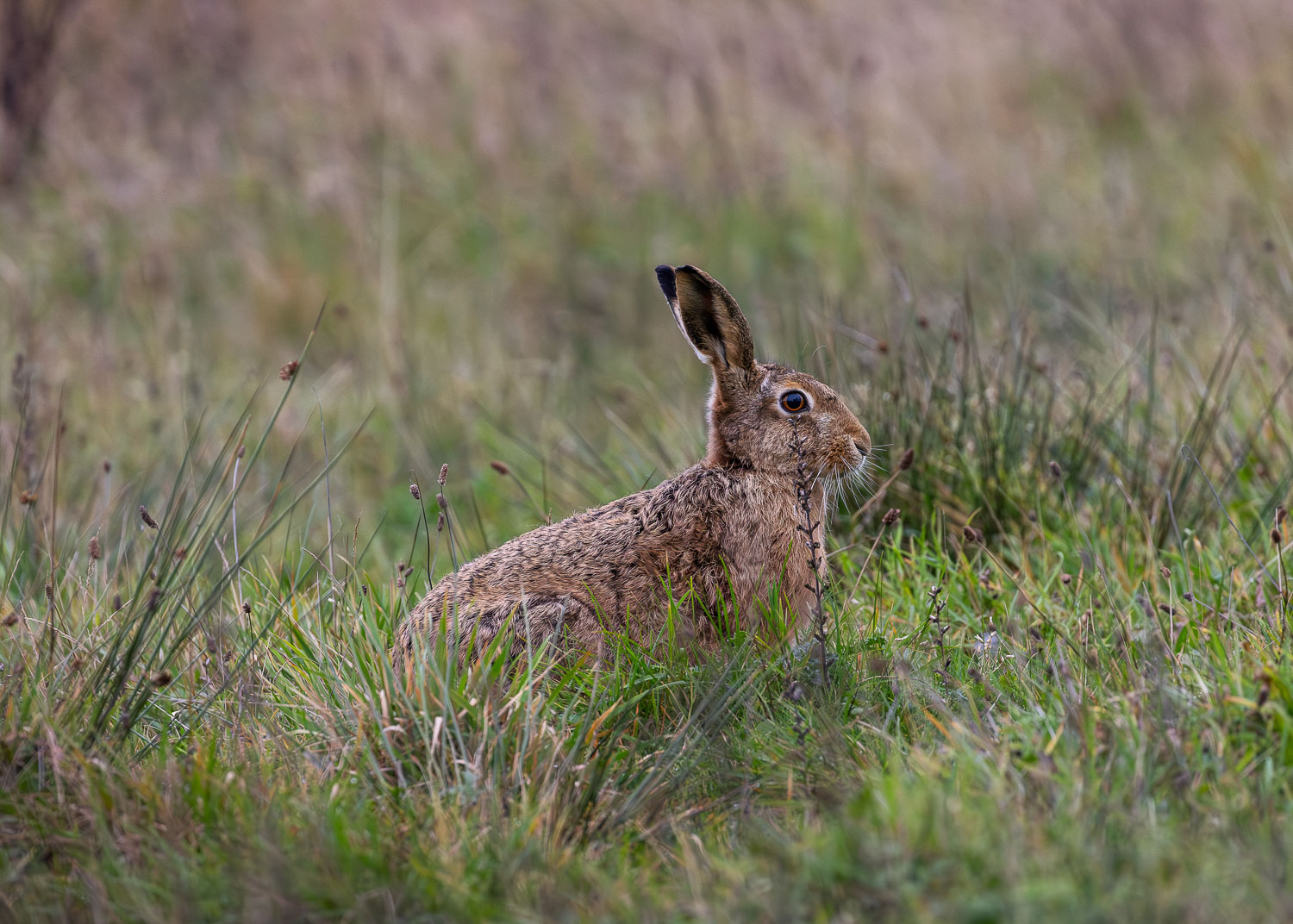
Private land and asking for permission to access
I’ve touched on this in various other posts, but honestly, one of the best things you can do as a wildlife photographer is have conversations with locals and landowners. As long as you’re respectful and clear about your intentions, most people are more than happy to grant you access to their private land for nature photography.
The meadow itself is a prime example of how invaluable rewilding is. A mix of beautiful sedges, rushes, and long grasses left to thrive. No cutting, no sculpting, no treating; just nature doing what it does best, and it shows through the diversity of species that call this place home.
Fieldcraft tip: Look for hare runs as a sign of activity
The beauty of looking for hares in long wild grasses is that it’s easy to spot “runs” – well-trodden pathways that hares use when moving between grazing areas. Knowing their active areas would make capturing the mad March hares in action easier…or so I thought.
The Past Few Weeks in the Meadow
The first few weeks of March passed by quickly, too quickly. The weather had been fairly kind, giving me plenty of opportunity to sit at the edge of the meadow and capture intimate moments with the hares. I’d had quite a few close encounters, but still no boxing action. As long as you sit perfectly still and low to the ground, hares will sometimes venture unbelievably close. I’ve had hares pass by within inches of me, close enough that I felt I had to hold my breath to avoid disturbance!
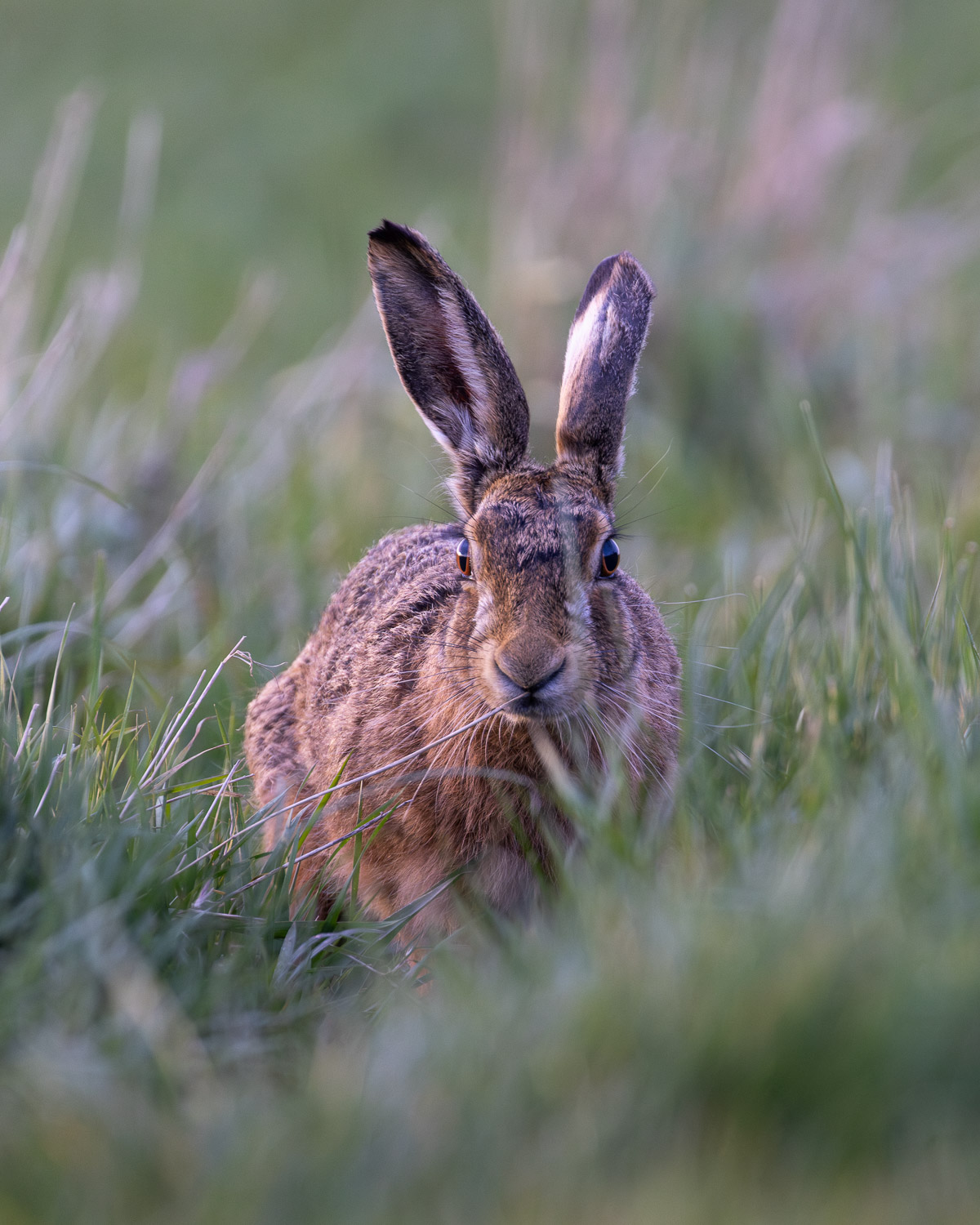
The above image is one of many breathtaking close encounters captured at 560mm, ISO 1600, f/8, 1/400s.
I’ll be honest, by the second week of March, having spent most evenings in the field, I soon realised there were far fewer hares than expected. This spot is usually home to a dozen or more. This year, if I had to guess, I’d say there was half that, maybe even less. The already challenging project suddenly felt as though it was quickly slipping out of reach.

By the third week of March, the doubts began to creep in. If you’re a wildlife photographer, you’ll know exactly what I mean. The second-guessing and self-doubt, questioning every move you make. Am I in the right spot? Should I move? Should I find an entirely new location? All you can do is remember your goal and push through. I promise you, the end result is worth the struggle.
Recognising individual hares
By the fourth week, I’d begun to recognise familiar hares. I’d spent so much time sitting at the edge of the meadow that I started to notice regular visitors and their behavioural patterns. I’m very familiar with hare behaviour in general, but getting to know individual hares’ behaviour felt a little bit more special.
One character that stood out was this battle-scarred hare. I can only imagine what mischief led up to the injury to his ear. It was fully healed and didn’t cause him any disadvantages aside from making it easier for me to identify him.

A Moment of Magic: Capturing Boxing Hares
With the end of March rapidly approaching, my confidence was low. I’d already partially accepted that capturing boxing hares on camera during the March madness might have been a tad overzealous. But there were still a few days left, and I’m never one to give up trying.
I headed out as usual around 4:30 PM. The weather was impeccable, not a cloud in the sky. The atmosphere the moment I stepped outside was perfect, and the sun on my face felt glorious. It was still early in the day for photographing hares (hares being crepuscular and most active at dawn and dusk), but I always like to get to my location early and get established well before the action starts. That way, I minimise the risk of disturbance during peak times.
As I walked down the road alongside a local field, movement immediately caught my eye. Three hares were bounding around in a small area, seemingly chasing each other. I instinctively ducked down behind the rough field margins and pulled out my camera to capture the moment. I lined up a beautiful countryside cottage as the backdrop and caught the March madness in a single frame. Little did I know, this was the beginning of something special.
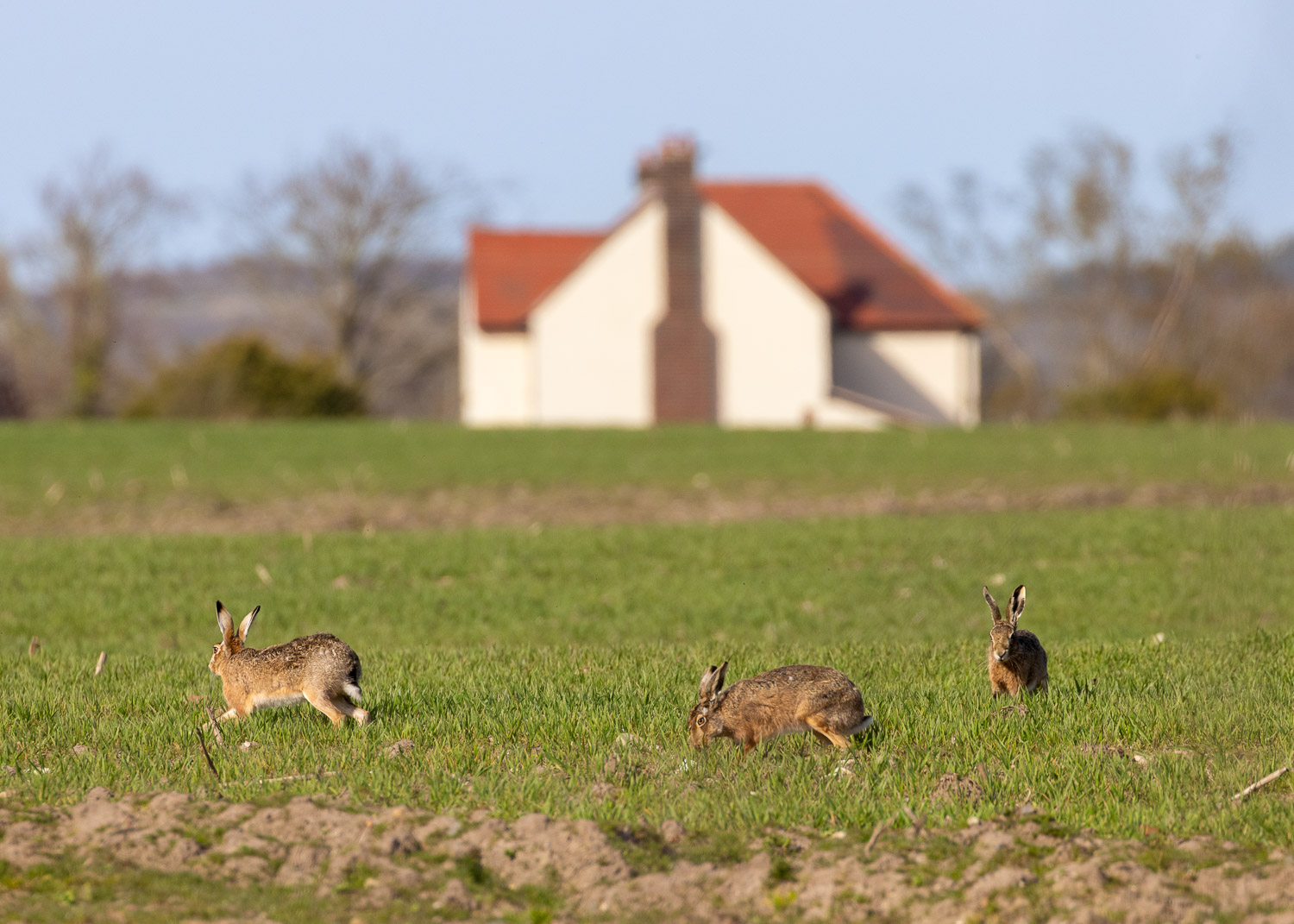
A quintessential countryside hare scene, captured at 560mm, ISO 800, f/8, 1/1600s.
Moving closer for a better vantage point
Over the past year or so, I’ve realised that nature has a funny way of giving you signs. Every time I’ve felt defeated and close to giving up, nature throws me a bone. This was one of those moments, and I was ready for it.
After capturing the beauty of the group of hares bounding around the field, I set about silently creeping closer for a better vantage point. This was a tedious process; one wrong move would have sent the hares bounding for cover. I was pretty much down on all fours, carefully edging my way through the undergrowth as silently as possible, all the while, cars were driving past along the country lane. Not my most graceful moment, but I didn’t care!
I’d managed to crawl myself into a prime viewing spot, lined with long grasses that provided me enough cover to hide behind. The hares were still energetically darting around the field, around 30 metres from my position. No more than five minutes after arriving, a chain of explosive events kicked off.
Capturing the beauty of boxing mad March hares
Out of nowhere, one of the male hares approached what I now believe was a female and stood up over her. Almost reactively, the female postured and stood her ground.

What happened next completely blew my mind. The female, clearly not interested in the attention, returned the favour and lunged toward the male. The confrontation lasted seconds, and with this brief exchange, both hares separated and ran in different ways. I tracked the female as she ran further away from me into the middle of the field. The eagle-eyed among you will notice the third hare sitting out of focus in the foreground. This sets the scene for the second, more explosive confrontation.


Round two…fight
The second male, who was sitting in the foreground, nonchalantly watching the action unfold, suddenly stood up. He started tracking his way towards the middle of the field, where the female was positioned. Feeling his chances, I guess he attempted to impress the female and failed miserably. He was also unfortunately presented with an explosive flurry of paws and sent packing.
I’ll let the following sequence of images summarise the encounter. I will say that, considering these images were shot in harsh light, it wasn’t a problem for the Canon R5. There’s some minor softness to the images due to heat haze, but aside from that, I couldn’t be happier!


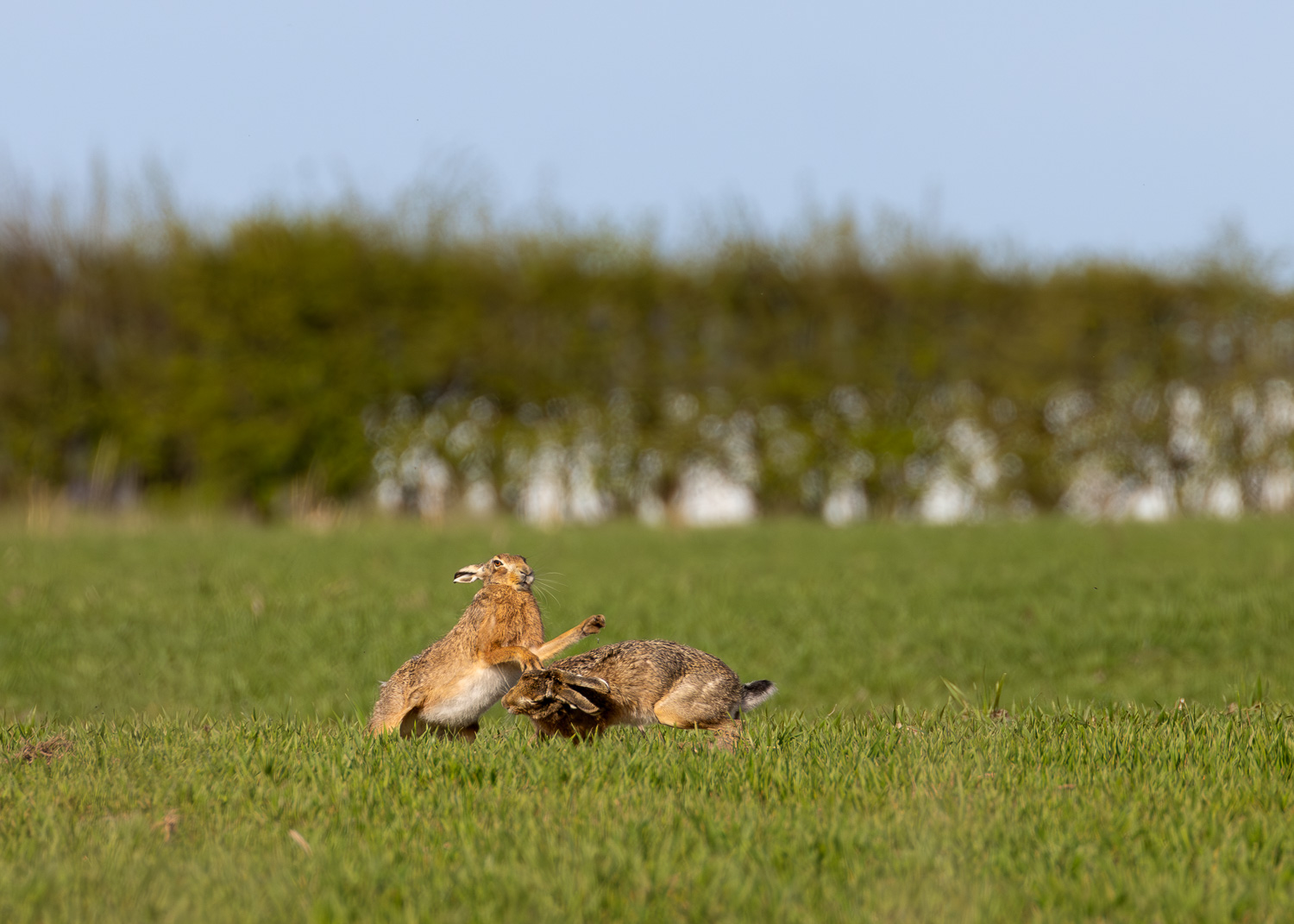
This explosive sequence of shots featuring the elusive boxing hares was captured at 560mm, ISO 800, f/8, 1/2500s.
The moment barely lasted 10 seconds, but what a way to see the project through. I was on cloud nine. Reviewing the images on the rear LCD of my camera, I let out the biggest silent celebration – I couldn’t be too loud as the hares were still in the area! Mad March hares caught boxing on camera with a couple of days to spare. It doesn’t get much better than this.
Tips for Photographing Wild Hares
Here are a few tips to help you capture the beauty of brown hares if you’re new to wildlife photography:
- Choose a suitable location, such as farmland, field margins, or wild meadows.
- Go out around dawn and dusk. Hares are crepuscular and most active around the golden hours.
- Look for “hare runs”, obviously worn pathways through fields that hares routinely use to move around.
- Get down low and be as silent and still as possible. Hares are always on high alert; the slightest rustle or movement will disturb them and send them bolting off, never to be seen again.
- Use a lens with a focal length of at least 200mm for close-up hares. Zoom lenses such as the 100-400mm or 150-600mm are the perfect choice for most scenarios. Longer focal lengths allow you to maintain a respectful distance.
- Stop down your aperture to increase depth of field, especially for close-up hares. Apertures between f/4 and f/8, depending on the scenario, work well.
- Subject tracking and eye detection generally work well, but sometimes long grasses can confuse autofocus, so be ready to switch to manual focus or spot AF.
- Patience pays off. Pick a location with signs of activity and stick with it. Moving around will only increase the chances of disturbing hares in the nearby area. It’s not unusual to sit waiting for several hours before finally seeing some activity.
- Be creative. Try practices such as Intentional Camera Movement (ICM) and panning to emphasise the speed of hares.
- Leave no trace! Leave land exactly as you found it. Stick to field margins and avoid trampling sensitive areas.
- Respect the law and the species. Brown hares are protected under the Wildlife and Countryside Act 1981, and leverets are incredibly vulnerable to disturbance during the breeding season.
Closing Notes
Just before I wrap up this post, I know hares can be seen boxing well into the summer months, but for this project and in the context of mad March hares, I wanted to capture the behaviour during March. It’s also much more difficult throughout the summer months as crops grow taller, making it easier for hares to move unseen.
Capturing mad March hares has been my most challenging project yet, spanning weeks and truly testing my persistence and dedication. Seeing it through was one of the most rewarding experiences I could have asked for. I’ll never get bored photographing hares, and I can’t wait to see what the future brings for improvement.
Until then, it’s back to a spot of landscape and wildflower photography. The native bluebells are out, the woodlands are looking breathtaking, and I can’t wait to capture their beauty once again. Field Notes posts may slow down a little throughout spring. There’s so much to capture, and I’m eager to make the most of it. I will catch up, and the content will be well worth the wait.
Take Your Wildlife Photography to the Next Level
If this post has inspired you and you’re ready for the next challenge, consider reading my detailed guide on how to ethically photograph barn owls. Years of experience out in the field, all compiled into one resource, giving you access to fieldcraft tips, wildlife photography ethics, recommended camera settings, and compositional ideas to help you capture these stunning birds responsibly.